If you’re planning a trip through Italy, pairing Florence and Venice is almost a no-brainer. I’ve done this route a couple of times, and honestly, it’s one of the easiest (and most rewarding) connections you can make in the country.
In less than 300 km, you go from Renaissance masterpieces to canals and gondolas—without much hassle. The best part? Getting between them is easy, fast, and relatively affordable. Here’s what it’s really like.
How to get from Florence to Venice
1. Taking the train, my go-to option
Every time I’ve traveled between Florence and Venice, I’ve chosen the train and I’d do it again without hesitation. It is easy and confortable.
Most services are run by Trenitalia, and you’ve got several options depending on your budget and how fast you want to get there.
High-speed trains (Frecciargento & Frecciarossa)
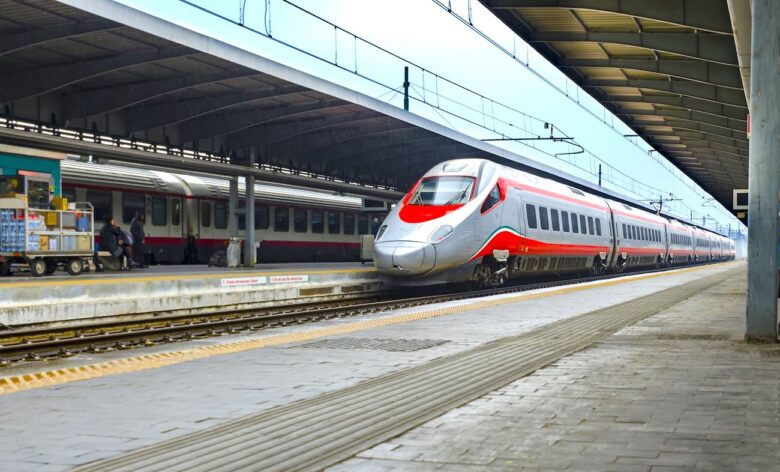
If you want the smoothest experience, go straight for the high-speed trains: Frecciargento or Frecciarossa. I’ve tried both, and, in my opinion, they’re equally comfortable, clean seats, air conditioning, Wi-Fi (sometimes a bit patchy), and plenty of luggage space.
They glide through the Italian countryside at up to 300 km/h, and before you know it, you’re stepping off the train in Venice. The journey takes about 2 hours.
You’ll depart from Santa Maria Novella Station, right in the heart of Florence, and arrive at Santa Lucia Station, which is literally on the Grand Canal. That first step outside the station in Venice? Unreal.
Prices usually fall between €30 and €50 if you book ahead. I once paid under €25 by booking early, but I’ve also seen last-minute tickets shoot well past €60. Lesson learned: book early if you can.
You’ll also notice different ticket types (Base, Economy, Super Economy) and classes (Standard to Executive). Unless you’re splurging, Standard or Premium is more than enough.
Intercity trains: slower, but cheaper
I tried an Intercity train once to save a bit of money. It worked fine, but it’s not as smooth an experience.
You’re looking at about 2.5 to 3 hours, sometimes with more stops. Also, trains often leave from Firenze Rifredi Station and arrive at Venezia Mestre Station, which isn’t Venice proper, so you’ll need an extra connection.
If you’re traveling light and don’t mind the extra step, it’s a solid budget option. I’ve seen tickets for €20–€25. But with luggage? I’d think twice.
Regional trains: only if you’re really on a budget
I wouldn’t recommend regional trains unless you’re really trying to save every euro.
They can take up to 4 hours and 45 minutes, often with multiple changes. Prices start around €21, so the savings aren’t huge compared to faster options.
For me, the extra time just isn’t worth it when high-speed trains are so efficient.
Final tip from experience
If there’s one thing I’ve learned doing this route: don’t overthink it, just take the high-speed train. It’s fast, comfortable, and drops you right where you want to be in both cities.
And trust me, arriving in Venice by train beats arriving any other way. That first view of the canals is something you won’t forget.
2. Bus from Florence to Venice: the budget-friendly route (with a few trade-offs)
It’s definitely cheaper than the train, but you’ll feel the extra travel time, especially if you’re used to Italy’s high-speed rail. That said, if you’re not in a rush and don’t mind sitting a bit longer, it’s a perfectly valid option.
FlixBus
This is probably the most popular and easiest option. I took a FlixBus on an early morning departure, and the experience was straightforward: decent seats, Wi-Fi (again, hit or miss), and power outlets.
The journey usually takes between 3.5 and 4.5 hours, depending on traffic and stops. Buses leave from Piazzale Montelungo in Florence and drop you either at Tronchetto (closer to Venice itself) or Mestre (on the mainland).
Prices can be ridiculously cheap if you book early. I’ve seen tickets for under €10, and sometimes even around €6 during promotions. For that price, it’s hard to complain.
Baltour
I haven’t personally used Baltour, but I looked into it on one of my trips when comparing options. They run several departures a day, typically four, starting mid-morning and running into the afternoon.
Travel time is similar to FlixBus (roughly 4 hours) and prices tend to range between €17 and €26. Not the absolute cheapest, but still reasonable if train fares are high.
Like most buses, they’ll get you to either Tronchetto or Mestre, so keep in mind you may need an extra connection depending on where you’re staying.
Buscenter
Buscenter is a bit more limited. There’s usually just one departure per day, leaving Florence early afternoon and arriving in Venice in the early evening.
It’s a longer ride, around 4.5 to 5 hours, and costs about €24. I’d only consider this if the timing works perfectly for your schedule or if other options are sold out.
My honest take
Buses are great if you’re traveling on a tight budget or booking last minute when train prices have gone up. But if you can afford the difference, I’d still choose the train every time.
That extra hour (or two) on the road feels longer than it sounds, especially when you know there’s a 2-hour train zipping past the same route.
3. Driving from Florence to Venice, freedom… with a few catches
Driving only makes sense if Florence and Venice are just two stops on a bigger itinerary.
The drive itself is easy enough. Italian highways are well maintained, clearly signposted, and honestly pretty enjoyable once you get out of the cities.
The fastest route (around 255 km) follows the A13 motorway and takes roughly 2 hours and 40 minutes without traffic. There’s also a longer option via the A4/E70 (about 340 km), which can take closer to 3.5 hours.
But here’s what I wish I had considered more carefully before doing it:
- Tolls add up quickly on Italian highways
- Fuel isn’t cheap
- And if you’re renting, that’s another cost on top
By the time you factor everything in, it’s usually more expensive than the train, and definitely not faster.
Then comes the biggest drawback: you can’t actually drive into Venice. You’ll have to leave your car in places like Tronchetto or Piazzale Roma and continue on foot or by vaporetto. And Parking is not cheap in Venezia.
My take? Drive if you’re exploring multiple places along the way. Otherwise, skip the hassle.
4. Flying: sounds tempting, but not worth it
On paper, flying between Florence and Venice might seem like a good idea. There are airports on both ends, Florence Airport (Amerigo Vespucci) and Venice Marco Polo Airport, and the distance is short.
But in reality? I wouldn’t even consider it.
There are no direct flights, so you’ll need at least one layover. By the time you factor in airport transfers, security, waiting times, and the connection itself, you’re looking at 4 hours or more often longer than the bus and definitely slower than the train.
And then there’s the price. Flights regularly go over €100, which makes it the most expensive option by far.
This is one of those routes where flying just doesn’t make sense. Italy’s trains are too good and too convenient for this to be worth the trouble.
READ OTHER TRAVEL TIPS
- Where to stay in Florence
- Florence in two days: Itineraries + maps
- Where to stay in Venice
- Best things to See and Do in Florence
- How to get from Mestre to Venice
- How to get from Treviso Airport to Venice
- Best places to stay in Rome
- Where to stay in Verona
- How to get from Verona Airport to city centre
- Where to Stay in Tuscany
- Where to stay in Milan