
One of the things that surprised me most about travelling around Argentina is just how diverse the weather is. Stretching for more than 3,700 kilometres (2,300 miles) from north to south, Argentina covers everything from subtropical rainforests near Brazil to the subpolar landscapes of Tierra del Fuego.
That means there’s no such thing as “the weather in Argentina”. The climate changes dramatically depending on where you go, so choosing the right time to visit can make a huge difference to your trip.
In this guide, I’ll walk you through Argentina’s different climate zones and help you discover the best time to visit Argentina.
Although much of the country enjoys pleasant temperatures for most of the year, some of Argentina’s best-known destinations, including humid Buenos Aires, the spectacular Iguazú Falls and the wild, windswept landscapes of Patagonia, experience some extreme weather.
In Argentina, the seasons correspond to the following months:
- Spring: September, October, and November.
- Summer: December, January, and February.
- Autumn: March, April, and May.
- Winter: June, July, and August.
When Is the Best Time to Visit Argentina?
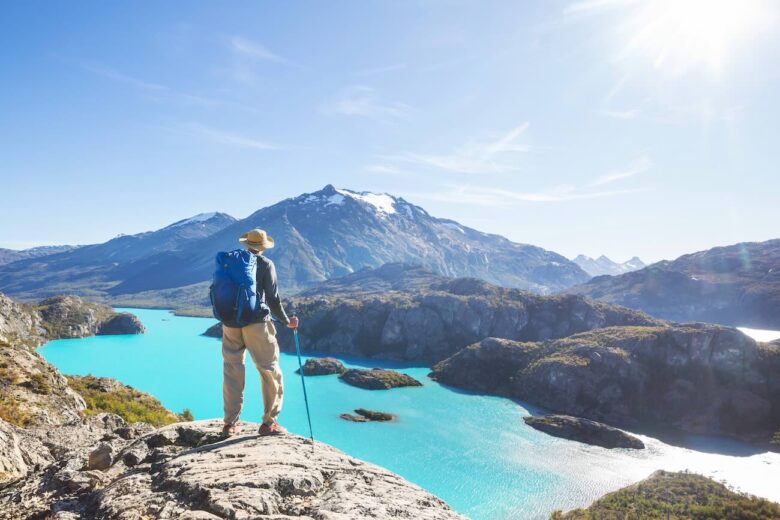
One of the biggest things to remember when planning a trip is that Argentina is in the Southern Hemisphere, so the seasons are the opposite of those in Europe and North America.
After travelling through several regions, I’d say there’s no single best time to visit Argentina. The ideal season depends entirely on where you’re going.
In fact, the perfect time to visit one region can be the worst time for another, so if you’re planning a multi-stop itinerary, you’ll need to think carefully about both your schedule and what to pack.
Overall, spring (late September to early December) is my favourite time to travel around Argentina. The weather is generally pleasant, crowds are smaller than in summer, and it’s an excellent season for visiting most of the country’s iconic destinations.
The main exceptions are if you’re planning to ski in Bariloche or want to experience Patagonia’s glaciers at their absolute best. In that case, winter (July and August) is the ideal time to go.
If you’re heading to subtropical northern Argentina, I’d strongly recommend visiting between March and May. You’ll avoid the most intense summer heat, although skies can often be cloudy, and evenings are usually much cooler than daytime temperatures.
The Iguazú River reaches its highest water levels between January and May, making the spectacular Iguazú Falls even more impressive. The only downside is the hot and humid rainforest climate, which can feel quite intense during the height of summer.
For Buenos Aires, I always recommend spring and autumn, particularly October, November, March and April. Temperatures are generally comfortable, although occasional periods of heavy rainfall are still possible.
Spring usually brings plenty of sunshine, while autumn and winter alternate between bright sunny days and cloudy or rainy weather.
If you’re dreaming of swimming in the Atlantic, keep your expectations realistic. Thanks to the cold Falklands (Malvinas) Current, sea temperatures remain surprisingly cool, reaching only 19–20°C, even during the hottest part of summer around Mar del Plata.
Patagonia is one of those places I think is worth visiting at almost any time of year. That said, most travellers choose spring, when temperatures are cool but comfortable, especially if the strong Patagonian winds stay away.
Summer is another fantastic season, offering long daylight hours and some of the best conditions for exploring Patagonia’s breathtaking landscapes.
The Andes are also home to several world-class ski resorts, making Argentina one of the few places where you can enjoy skiing while it’s summer in Europe or North America.
Beyond the ski slopes, you’ll discover vast glaciers, crystal-clear glacial lakes and spectacular fjords, landscapes that look completely different and equally beautiful in every season.
If you’re planning to visit the far south of Argentina and would rather avoid the harshest winter weather, I recommend travelling during the austral summer (December to March).
November and April are also great months to visit, with cool but manageable temperatures that are perfect for exploring Ushuaia and the surrounding national parks.
Best Time to Visit Argentina: Weather & Climate Guide by Region
Northern Argentina: Hot, Tropical and Humid
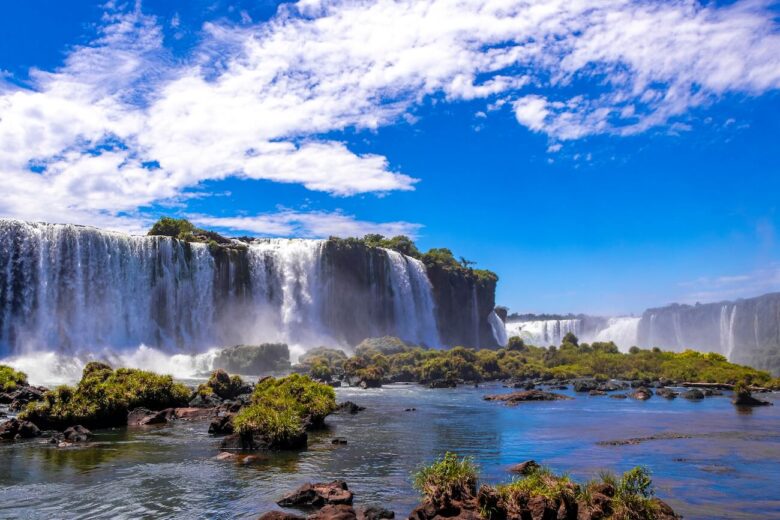
Northern Argentina has a subtropical climate, with very hot summers and pleasantly warm winters.
The western part of the region, known as the Gran Chaco, receives moderate rainfall during the summer months but remains very dry for the rest of the year.
One of the hottest places in the country is Rivadavia, in Salta Province. Between November and February, average temperatures reach around 36°C, while heatwaves can push temperatures to an astonishing 50°C, making it one of the hottest places in South America.
Winter is much more comfortable, with daytime temperatures averaging a pleasant 25°C. The only exception is when the Pampero arrives. Pampero is a cold, powerful wind blowing up from the south that can affect almost the entire country.
Further east, in Formosa Province, temperatures are slightly lower, but humidity increases noticeably. Rainfall is spread fairly evenly throughout the year, making the climate feel much damier than in the west.
Misiones Province is even greener and wetter. Located east of Paraguay along the Paraná River, this region receives abundant rainfall all year round, meaning there’s virtually no dry season. That’s exactly why the spectacular Iguazú Falls are surrounded by lush rainforest.
Central Argentina: Mild Winters and Warm Summers
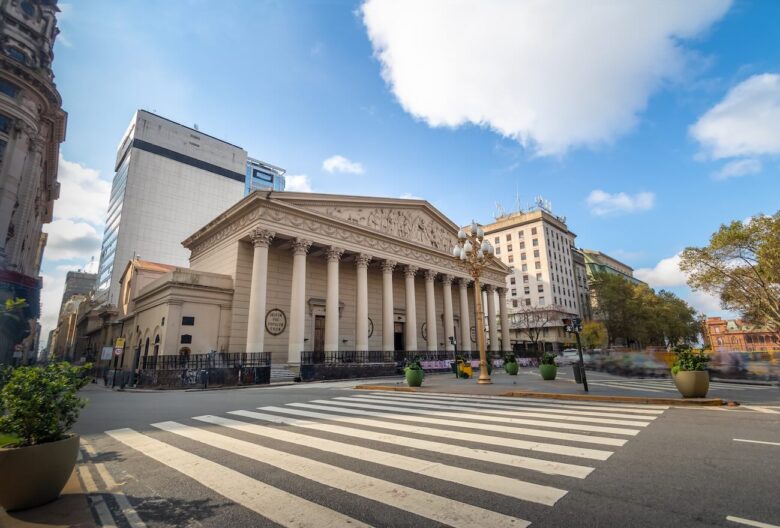
South of the Gran Chaco lies central Argentina, stretching all the way to the Río de la Plata estuary. This region enjoys a temperate climate, with mild winters and hot summers.
Rainfall changes throughout the year. Summers tend to be fairly wet, especially in the eastern areas close to Uruguay and the Atlantic coast, where afternoon thunderstorms are common. Winters remain wetter in the east but become considerably drier further west.
Buenos Aires has a climate that often reminds me of the Mediterranean, although unlike Spain or Italy, rain is possible even during the summer.
One thing you’ll notice is how unpredictable the temperatures can be. Because there are no mountain ranges blocking air masses, cold Antarctic air can bring light frosts between May and September, while warm northern winds can suddenly send winter temperatures soaring to 25–30°C.
Rosario, about 270 kilometres northwest of Buenos Aires, experiences very similar weather throughout the year.
Cordoba, however, sits almost 500 metres above sea level and has a more continental climate. Days tend to be warmer, nights cooler, and winters are noticeably drier, with average temperatures ranging from around 10°C in July to 24°C in January.
Western Argentina and Patagonia: The Driest Part of the Country
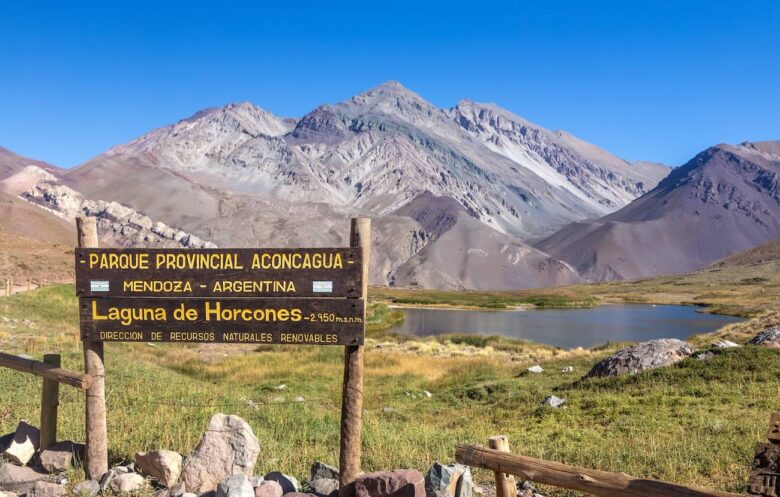
Western Argentina, including the western Pampas and much of Patagonia, is dominated by an arid, semi-arid or even desert climate.
The Andes act as a giant barrier, blocking moisture coming from the Pacific Ocean. As a result, rainfall is scarce across much of this region.
Even the southern Atlantic coast remains remarkably dry, as the prevailing westerly winds and the cold ocean currents reduce evaporation and cloud formation.
Despite the differences in latitude, these areas have several things in common. Days and nights often experience dramatic temperature swings, particularly away from the coast. Powerful winds frequently sweep across the open plains, sometimes creating dust storms.
Summers are generally sunny, while from May to September skies become much cloudier.
Mendoza, sitting 700 metres above sea level at the foot of the Andes, enjoys a dry, sunny climate with very little rainfall. Winter temperatures average around 8°C, while December and January average about 25°C.
One thing that often surprises visitors is how quickly temperatures change. During the day, even in winter, it can easily exceed 30°C, but overnight, especially between April and September, it frequently drops to 0°C or below.
Further south, Patagonia begins around the 40th parallel. This is where Argentina starts to feel cooler, windier and altogether much wilder.
Strong winds are a defining feature of Patagonia and often make the air feel significantly colder than the thermometer suggests.
Puerto Madryn, on the Atlantic coast, enjoys average temperatures of around 20°C in January and 7°C in June and July. During summer, temperatures can occasionally climb to 35°C, while clear blue skies are common between November and March.
If you’re hoping for a swim, however, don’t expect tropical waters. The Atlantic Ocean here stays surprisingly cold, reaching only around 17°C even at the height of summer and dropping to about 9°C for much of the rest of the year.
Rainfall is extremely limited, creating a semi-desert landscape with very few trees beyond hardy xerophytic shrubs. Winter brings heavy snowfall, and freezing temperatures become the norm across much of the region.
Tierra del Fuego: Argentina’s Wildest and Coldest Region
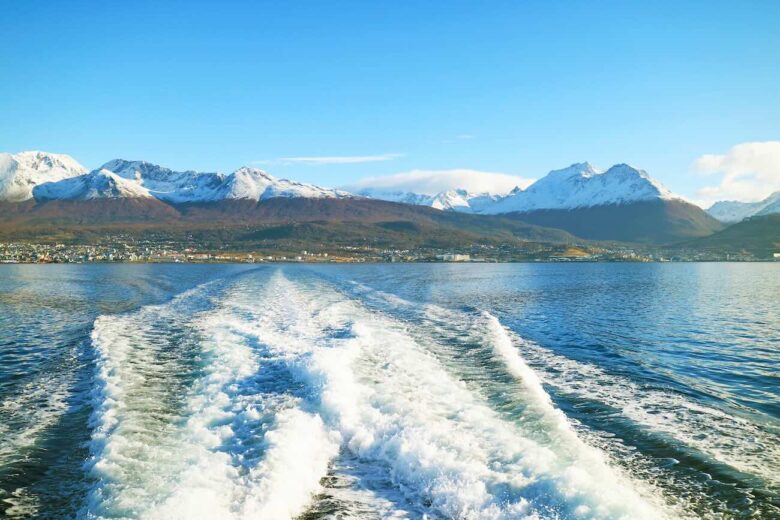
Of all the places I’ve visited in Argentina, Tierra del Fuego feels the most like the edge of the world. In the southernmost part of Patagonia, the climate becomes cold and oceanic, with average temperatures hovering around 0°C in winter and reaching only 10°C in summer.
Rainfall is much higher here than in the country’s arid regions, and at these southern latitudes, much of it falls as snow.
Because the Andes are lower in this part of Argentina, moist Pacific air masses can move inland more easily, while cold Antarctic winds constantly shape the weather, making conditions feel even harsher.
Ushuaia, the southernmost city in the world, sits on a spectacular fjord at 54° south latitude. Winter daytime temperatures average just 1.5°C, while even in January, the warmest month, daytime highs reach only about 10°C.
Night-time temperatures can fall below freezing at any time of the year, with extreme winter lows dropping to between -10°C and -15°C.
During the coldest months, heavy snowfall is common, while summers are often cool and rainy, meaning overcast skies are a familiar sight throughout much of the year.
The Andes: Mild Valleys and Snow-Capped Peaks
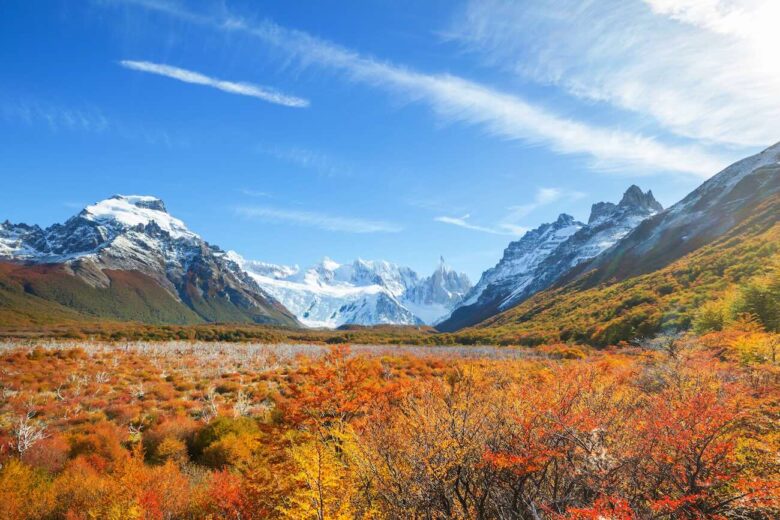
One thing I love about the Argentine Andes is how dramatically the landscape changes with altitude. While many people imagine endless snow, much of the lower mountain range actually enjoys a mild mountain climate.
Average temperatures range from around 22°C in January to 11.5°C between June and August. Even at relatively low elevations, the weather remains pleasant for much of the year, although night frosts are common from May to September.
Argentina is home to some truly spectacular mountain scenery, including Aconcagua, the highest mountain in the Americas, which rises to an impressive 6,962 metres. Located at 32° south latitude, its permanent snow cover begins at around 4,000 metres.
Further south, around Cerro Torre (49° south), the famous eternal snows begin much lower, from approximately 1,500 metres above sea level.
One fascinating detail is the Viedma Glacier, which descends to just 250 metres above sea level beside the lake of the same name. In the far south, permanent snow can be found from as little as 150 metres, a striking reminder of just how much colder this region becomes.
Around Aconcagua, winter brings frequent snowfall, although total annual precipitation remains surprisingly low, at just 250–300 mm, similar to many semi-desert climates.
South of the 40th parallel, however, the landscape becomes noticeably greener as vegetation begins to cover the slopes of the Andes. This contrast is especially obvious between towns on either side of the mountains.
San Carlos de Bariloche, sitting at 850 metres above sea level, receives around 800 mm of rain or snow every year. Just 200 kilometres east, Maquinchao receives barely 200 mm annually, creating a much drier landscape.
Another characteristic of this region is the warm Zonda wind, a downslope wind that can cause sudden temperature rises and occasionally bring unexpected rainfall.
Bariloche itself has average temperatures ranging from 2.5°C in July to around 14°C in January.
Nearby Cerro Catedral, one of Argentina’s best-known ski resorts, sits at 2,400 metres above sea level and experiences strong winds throughout the year.
Between June and September, the weather becomes extremely cold, with heavy snowfall and temperatures remaining below freezing for long periods. Even during summer, daytime highs rarely exceed 7°C, and summer snowfall is not unusual.
Other Articles About Argentina You May Be Interested In