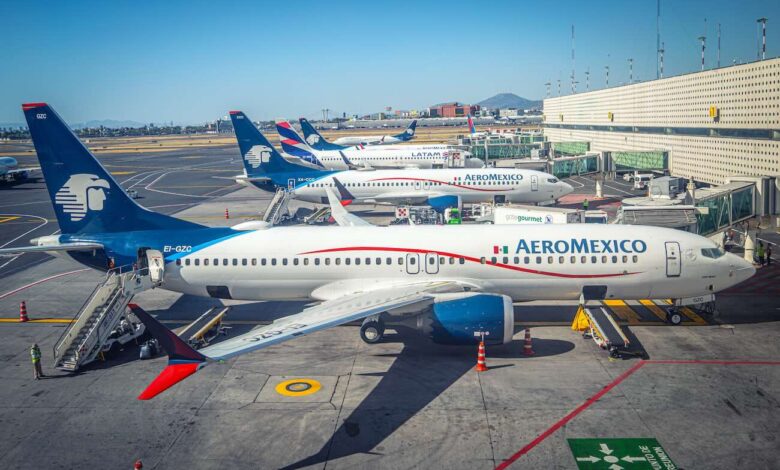
Getting from Mexico City Airport to downtown is surprisingly easy, affordable, and convenient. Thanks to the city’s extensive public transportation network, you can reach the center by metro, bus, taxi, rideshare, or rental car, depending on your budget and travel style.
Mexico City International Airport (Benito Juárez International Airport) is located just 5 kilometers (3 miles) from downtown Mexico City.
With more than 45 million passengers per year, it is the busiest airport in Latin America.
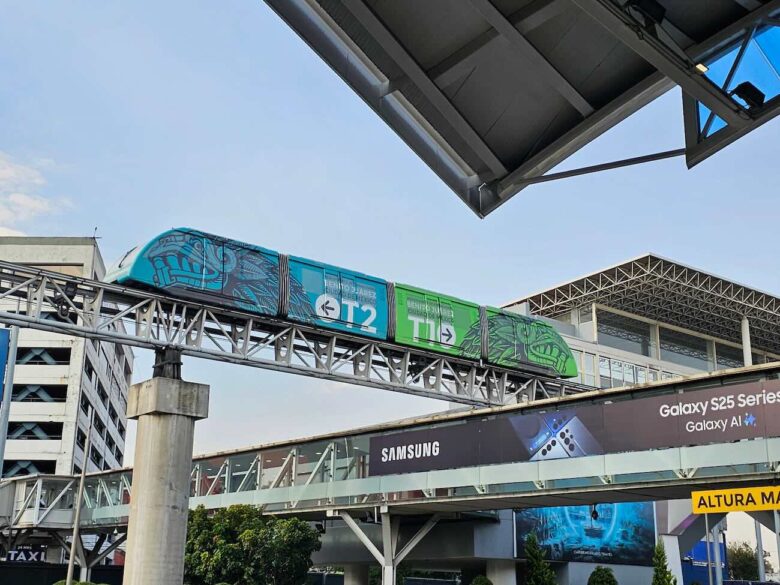
The airport has two terminals, connected by the Aerotren and shuttle buses, making transfers between them relatively straightforward.
One of the things I like about Mexico City is the variety of transportation options available directly from the airport. Whether you’re traveling on a tight budget or prefer the comfort of a private transfer, there’s an option for every type of traveler.
Inside both terminals, you’ll find clear signs directing you to the metro stations, bus stops, taxi stands, and other transportation services.
Below are the most popular ways to get from Mexico City Airport to the city center, along with their advantages and disadvantages.
How to Get from Mexico City Airport to Downtown
1. Metro, The Cheapest Option (But Not Always the Most Convenient)
If you’re looking to save money, the metro is by far the cheapest way to get from the airport to downtown Mexico City. However, it’s not necessarily the most comfortable option, especially if you’re traveling with heavy luggage or arriving during rush hour.
The closest metro station to Terminal 1 (a few meters outside the termina 1) is Terminal Aérea Station on Line 5. From there, you can connect to different parts of the city, although you’ll probably need to make one or more transfers depending on your final destination.
If you arrive at Terminal 2, the nearest station is Pantitlán (15 – 20 minutes walking from the airport), one of the city’s main transportation hubs. It connects with Metro Lines 1, 5, 9, and A, making it easy to reach many areas of Mexico City.
That said, if you’re visiting Mexico City for the first time, I wouldn’t recommend walking outside Terminal 2 to look for the metro station, especially late at night or after a long international flight.
Schedule and Frequency
One of the biggest advantages of the metro is its frequency. Trains generally arrive every 5 minutes.
Operating hours:
- Monday to Friday: 5:00 a.m. – 12:00 a.m.
- Saturday: 6:00 a.m. – 12:00 a.m.
- Sunday and public holidays: 7:00 a.m. – 12:00 a.m.
Prices and Fares
The metro is incredibly affordable. A single ticket costs just 5 Mexican pesos, regardless of the distance traveled or the number of transfers required.
Children under 5 years old and adults over 60 travel free of charge.
One interesting feature of the Mexico City Metro is the availability of women-only carriages, introduced as part of the city’s efforts to prevent sexual harassment on public transportation.
Quick Facts
- Price: 5 Mexican pesos (approximately €0.25), including transfers.
- Frequency: Every 5 minutes.
- Travel time: Around 40–50 minutes to downtown Mexico City, depending on your final destination and connections.
- Best for: Budget travelers, backpackers, and those traveling light.
- Official website: http://www.metro.cdmx.gob.mx/
2. Metrobús, The Best Balance Between Price and Convenience

If you ask me for the best public transportation option from Mexico City Airport to downtown, I’d probably recommend the Metrobús. It’s faster than the metro, doesn’t require complicated transfers, and is still very affordable.
The airport is served by Metrobús Line 4, which connects both terminals with several key points in the city, including the Historic Center and Buenavista.
You can board the bus at:
- Terminal 1: Door 7
- Terminal 2: Door 2
One of the biggest advantages of the Metrobús is that much of the route runs on dedicated bus lanes, meaning it avoids much of Mexico City’s notorious traffic congestion.
The journey to Buenavista Station takes around 30 minutes, making it one of the quickest and most efficient ways to reach the city center without paying taxi prices.
Along the way, the bus also stops at important transportation hubs such as:
- San Lázaro Metro Station
- TAPO Bus Terminal
- Historic Center
- Buenavista Station
These stops can be particularly convenient if your accommodation is located nearby or if you need to connect with other public transportation services.
Schedule and Frequency
The Metrobús operates frequently throughout the day, with departures approximately every 15 minutes. Operating hours:
- Monday to Friday: 4:42 a.m. – 12:00 a.m.
- Saturday: 5:31 a.m. – 11:30 p.m.
- Sunday and public holidays: 4:44 a.m. – 11:59 p.m.
Prices and Fares
A regular Metrobús ticket costs only 6 Mexican pesos, but the airport service on Line 4 has a special fare of 30 Mexican pesos. To use the system, you’ll need a rechargeable Metrobús card, which can be purchased at the airport.
The card costs 21 Mexican pesos, including:
- 15 pesos for the card itself
- 6 pesos of travel credit
- Children under 5 years old and adults over 70 travel free of charge.
The good news is that you can continue using the same card throughout the city’s public transportation network during your stay.
Quick Facts
- Price: 30 Mexican pesos (approximately €1.42).
- Frequency: Every 15 minutes.
- Travel time: Around 30 minutes to downtown Mexico City.
- Best for: Travelers looking for the best combination of affordability, speed, and convenience.
3. Hotel Shuttle, The Most Convenient Option If Your Hotel Offers It
Before leaving the airport, it’s always worth checking whether your hotel provides a complimentary shuttle service. Not all hotels in Mexico City offer airport transfers, but those that do can save you both time and stress, especially after a long flight.
A hotel shuttle typically takes guests directly from the airport to their accommodation. In some cases, you may share the vehicle with other travelers staying at the same hotel.
Pickup locations are usually:
- Terminal 1: Door 4
- Terminal 2: Available upon request at the hotel’s airport desk
The cost varies depending on the hotel. Some properties include the service free of charge as part of the reservation, while others may charge a small fee.
Personally, I think this is one of the most comfortable options available. You don’t need to figure out transportation, worry about directions, or carry your luggage through metro stations.
The driver takes you directly to your hotel door, making it an excellent choice if you’re arriving late at night, traveling with family, or carrying a lot of luggage.
Quick Facts
- Price: Free or low-cost, depending on the hotel.
- Frequency: Depends on the hotel’s schedule.
- Travel time: Approximately 20–30 minutes, depending on your hotel’s location and traffic conditions.
- Best for: Families, first-time visitors, and travelers who value convenience over saving a few pesos.
4. Taxi, The Most Convenient Door-to-Door Option

If you’re arriving late at night, carrying a lot of luggage, or simply don’t want to deal with public transportation after a long flight, taking a taxi is one of the easiest ways to get from Mexico City Airport to your hotel.
What I like about airport taxis is the simplicity. Once you’ve collected your bags, you can head straight to the official taxi stands and be on your way within minutes. There’s no need to figure out metro connections, purchase transport cards, or navigate unfamiliar streets.
The main drawback, however, is the price. Compared to public transportation, taxis are by far one of the most expensive ways to reach downtown Mexico City.
Official taxi stands are available at both terminals, near the domestic and international arrivals areas.
Taxi Pickup Locations
Terminal 1
- International Arrivals: Doors 9 and 10
- Domestic Arrivals: Door 1
Terminal 2
- International Arrivals: Door 3
- Domestic Arrivals: Door 4
One piece of advice I always give travelers is to use only authorized airport taxis. Mexico City has long struggled with unofficial taxi operators, so it’s worth taking a few extra minutes to book through the official airport system.
Some of the authorized companies operating at the airport include TaxiRIDE, Confort Unlimited, Porto Taxi, Sitio 300, Nueva Imagen, and Yellow Cab.
Another important detail is that airport taxis work differently from regular street taxis. Before getting into the vehicle, you’ll need to purchase a prepaid ticket at one of the official counters located near the terminal exits. The fare is paid in advance rather than directly to the driver.
Prices typically range between 270 and 400 Mexican pesos, depending on your destination and traffic conditions. Official fare tables are displayed at the airport, so you’ll know exactly how much you’ll be paying before the journey begins.
If you’re traveling with friends or family, you can also book larger taxis that accommodate up to eight passengers. Splitting the fare often makes this option much more affordable.
Quick Facts
- Price: 270–400 Mexican pesos.
- Frequency: Available 24 hours a day.
- Travel time: Approximately 20–30 minutes to downtown Mexico City, depending on traffic.
- Best for: Travelers arriving late at night, families, and anyone looking for a hassle-free door-to-door service.
5. Private Transfer: The Most Comfortable and Personalized Option
If comfort is your top priority, a private transfer is probably the best way to travel from Mexico City Airport to your accommodation.
Personally, I think private transfers are ideal when arriving in a new city for the first time. Having a driver waiting for you at arrivals removes a lot of the uncertainty that often comes with landing in a busy international airport.
Unlike a standard taxi service, private transfers can be customized to suit your needs. Depending on the company, you may be able to choose the vehicle size, pickup time, language spoken by the driver, and other additional services.
Shared transfer options are also available. These are usually operated by minibuses and can significantly reduce costs while still offering a comfortable journey.
Prices start at around 200 Mexican pesos for a shared transfer, while a private vehicle for up to four passengers typically costs around 800 Mexican pesos.
Although this is more expensive than public transportation, many travelers find the convenience worth the extra expense, particularly after a long-haul flight.
Quick Facts
- Price: Around 800 Mexican pesos for a private vehicle for up to four passengers.
- Frequency: Available 24 hours a day.
- Travel time: Approximately 20–30 minutes, depending on traffic conditions.
- Best for: Families, groups, business travelers, and visitors who prioritize comfort and convenience.
6. Uber: Usually Cheaper Than a Taxi
Another popular option is using Uber to travel between the airport and downtown Mexico City.
In many cases, Uber can be noticeably cheaper than an official airport taxi while offering a very similar level of comfort. Travel times are generally the same, and the app allows you to see the fare estimate before confirming your ride.
One reason many travelers prefer Uber is the transparency. You know exactly who your driver is, where they are picking you up, and how much the trip is likely to cost.
Typical fares usually fall between 230 and 350 Mexican pesos, although prices can increase during periods of high demand or heavy traffic.
For budget-conscious travelers who still want the convenience of a private vehicle, Uber often represents one of the best value-for-money options available from the airport.
Quick Facts
- Price: 230–350 Mexican pesos.
- Frequency: Available 24 hours a day.
- Travel time: Approximately 20–30 minutes to downtown Mexico City, depending on traffic.
- Best for: Travelers looking for a balance between affordability, convenience, and comfort.