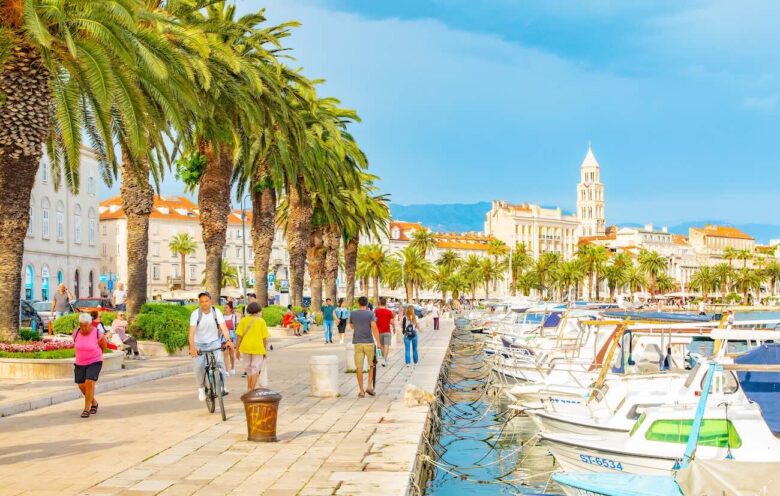
In this guide, I’ll go through the best things to do and see in Split, including the places I think are well worth visiting and a few ideas for making the most of your stay.
Split is one of my favourite cities in Croatia. I love the way history and everyday life mix here. You can be walking through the remains of Diocletian’s Palace one minute, having a coffee in a lively square the next, and then strolling along the waterfront with the Adriatic right in front of you.
The historic centre of Split is compact and very walkable, and most of the main sights can easily be visited on foot. You generally won’t need public transport if you’re staying in or around the centre (have a look to this post: Where to stay in Split).
Public buses become useful for places farther out, such as some beaches, neighbourhoods, or nearby towns.
There’s quite a lot to see and do, both in the city and around it. You can spend your time exploring the old town and its historic sights, climb up Marjan Hill for some great views, relax on one of the beaches, or simply enjoy the atmosphere of the Riva.
The Best Things to Do in Split
1. Wander Through Split’s City Center
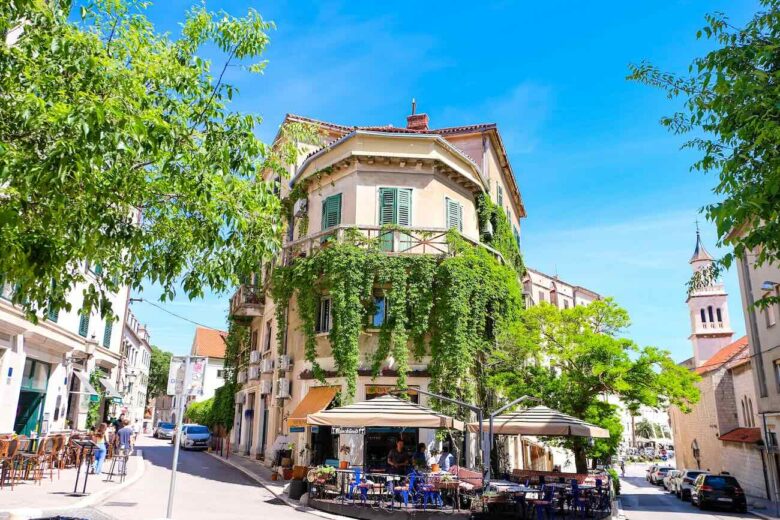
One of the first things you should do in Split is simply wandering through the city center. This is where you will find the greatest concentration of history and tradition, so it is naturally one of the busiest parts of the city.
These streets have stood for centuries, and in several sections, you can still see cobblestones dating back to Roman times. Different architectural styles come together here, reflecting the many civilizations that have shaped Split over the centuries.
Take your time as you explore. Some of the most interesting places are small shops and hidden corners that are easy to miss if you rush.
You will also find plenty of accommodation here. If you’re short on time, staying in the center makes it much easier to explore Split on foot.
2. Stop at Narodni Square
Split has several beautiful squares in its Old Town, and Narodni Square is one of the liveliest. Located just outside the walls of Diocletian’s Palace, it is surrounded by cafés and restaurants and is almost always buzzing with activity.
It is an ideal spot for trying traditional Croatian food or sitting down for a coffee while deciding where to head next.
The square is also home to the old town hall and its historic clock tower. The town hall’s façade has been restored several times and still retains its elegant Neo-Gothic appearance.
Today, the former town hall is an exhibition hall, so you can combine a little local art with a look inside one of the square’s most interesting buildings.
3. Explore Diocletian’s Palace
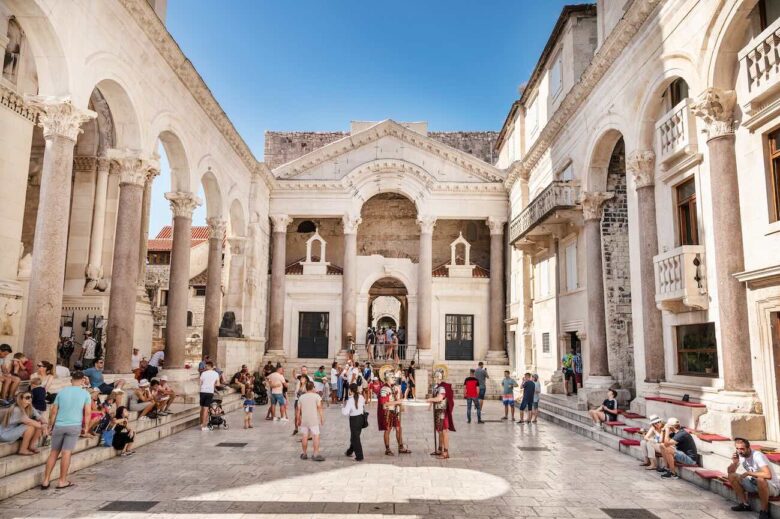
Diocletian’s Palace, built from limestone and marble, is the heart of Split’s historic center and one of the city’s absolute must-sees.
Roman Emperor Diocletian built the palace as his retirement residence, making him the first Roman emperor to abdicate voluntarily.
Because it is Split’s biggest attraction, it can get extremely busy. I recommend going early in the morning, when the narrow streets are much quieter.
You can explore areas such as the cellars, Diocletian’s Mausoleum, Split Cathedral, and the Temple of Jupiter. The latter two attractions charge a small entrance fee. The complex was also protected by walls with 16 original towers.
Don’t miss the four historic gates: the Iron, Silver, Golden, and Aenea Gates. Each one offers a different entrance into this fascinating part of Split.
And if you’re a Game of Thrones fan, you may recognize some of the palace’s locations, as several scenes from the series were filmed here.
4. Shop Along Marmontova Street
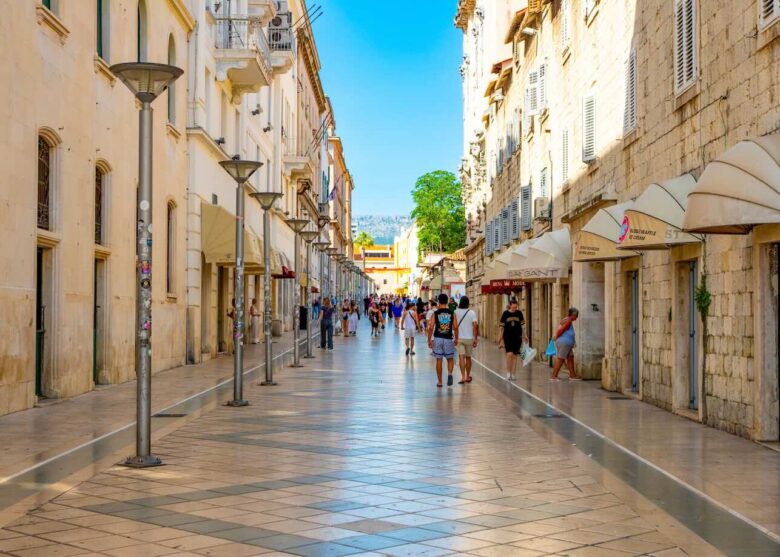
If you want to pick up some handicrafts or local products, Marmontova Street is worth a stroll. The street runs through Split, passing the old fishermen’s quarter before reaching the waterfront.
Along the way, you’ll find small local shops and souvenir stores that have been serving visitors for decades, alongside international brands such as Zara.
The main attraction, though, is the covered fish market. Local fishermen bring their catches here early in the morning, and this is when the market is at its liveliest.
I recommend visiting first thing in the morning, when the stalls are full and the day’s trading is just getting started.
5. Explore Marjan Park and Hill
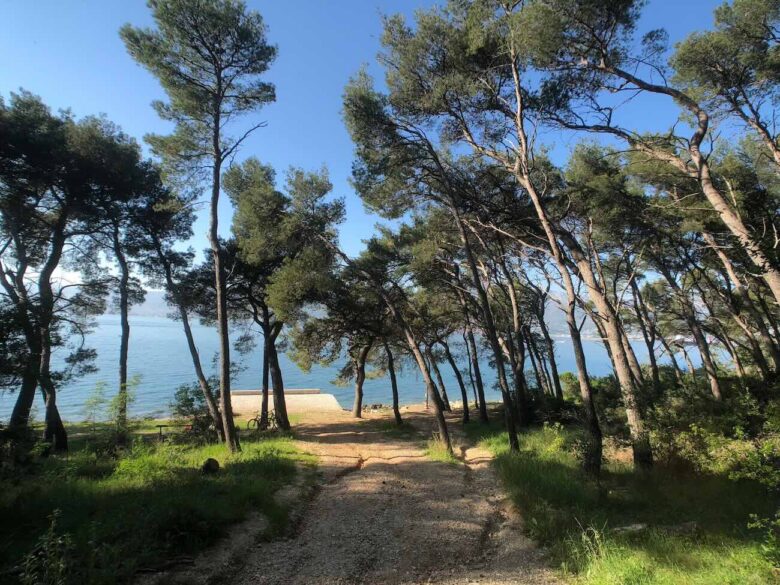
Not far from Lazareti Square, you will find Marjan Park and Hill, one of my favorite places to escape the bustle of central Split. It is the city’s main green lung, with beautiful views stretching across the sea and surrounding mountains.
The hill rises to almost 180 meters and has several viewpoints where you can stop and admire panoramic views over the harbor.
Inside the park, you can also discover an old Jewish cemetery dating back to the 18th century, as well as several historic churches.
Marjan also gives you access to beaches and restaurants where you can try traditional Croatian dishes. The park is also home to a small zoo, although I would focus on the scenery and walking trails.
As you explore, you will see locals exercising, hikers enjoying the trails, and visitors heading towards St. Nicholas and St. Jerome churches.
6. Discover Lazareti Square
Close to the fish market, you will find Lazareti Square, a historic area that once played an important role in Split’s trade.
Centuries ago, this was where merchants arriving by land and sea could find the bank, merchants’ exchange, barracks, and transaction office. Today, the square has a much more relaxed atmosphere and is a popular meeting point near the waterfront.
Dozens of terraces and cafés line the square, making it a pleasant place to stop for a coffee or something to eat.
From here, you can easily walk towards the waterfront and St. Francis Church, while also finding souvenir shops, artisan jewelry stores, and accommodation nearby.
7. Touch Grgur Ninski’s Toe for Good Luck
Traveling to Split just to touch a toe? Once you hear the story, it makes much more sense. Just outside Diocletian’s Palace stands a giant 9-meter statue of Gregory of Nin, or Grgur Ninski.
This 10th-century bishop became famous for challenging the Pope in an effort to introduce the use of Croatian in Catholic services, as Latin was difficult for much of the population to understand.
The statue was created by the famous Croatian sculptor Ivan Meštrović, and a popular local tradition surrounds it. Legend has it that touching the statue’s thumb brings good luck and makes your wishes come true.
That is why you’ll often see visitors stopping for a quick touch. The thumb has become smooth and shiny from years of being rubbed by tourists.
8. Take a Trip to Plitvice Lakes
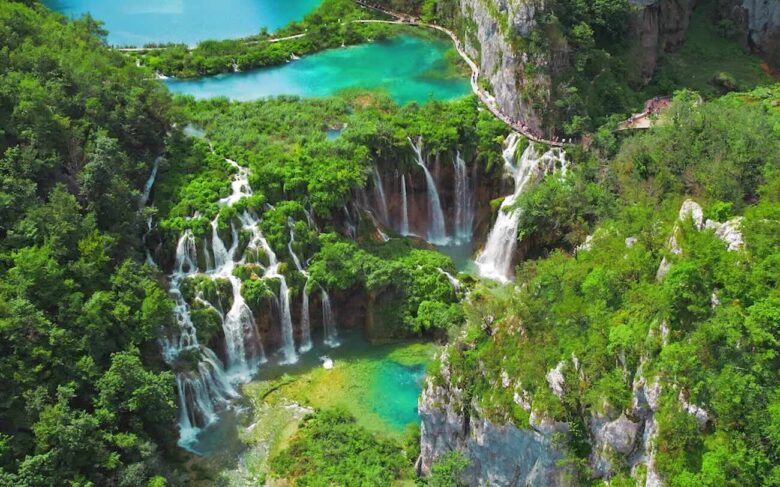
If you have not yet visited Plitvice Lakes during your travels around Croatia, you can also make the trip from Split. It is a long excursion, but if you have enough time, I think the scenery makes the journey worthwhile.
Plitvice Lakes National Park is a UNESCO World Heritage Site and one of Croatia’s most spectacular natural attractions.
What makes it so memorable is the combination of turquoise and deep-blue lakes, cascading waterfalls, and lush green forests. Walking along the wooden paths and seeing the water change color as you move through the park is an experience I would not miss.
Recommended Tour: From Split: Plitvice Lakes Guided Tour with Entry Tickets
9. Explore the Green Market
One of the essential things to do in Split, besides visiting the fish market, is to wander through the Green Market. Located near the Golden Gate of Diocletian’s Palace, it comes alive every day with stalls selling fresh fruit and vegetables along the old walls.
Local farmers and merchants have been selling their produce here for centuries. The fruit and vegetables you see are brought directly from the surrounding countryside, which gives the market a genuinely local atmosphere.
The combination of colorful stalls, enticing smells, and fresh produce makes this one of my favorite places to experience everyday life in Split. You will also find flowers, natural products, handicrafts, and antiques.
It is a great place to pick up a souvenir or stock up on fresh fruit before heading out to explore the city.
One thing to keep in mind is the summer heat. The market is not covered like the fish market, and the combination of high temperatures and large crowds can make it feel quite overwhelming.
10. Don’t Miss La Riva, Split’s Waterfront Promenade
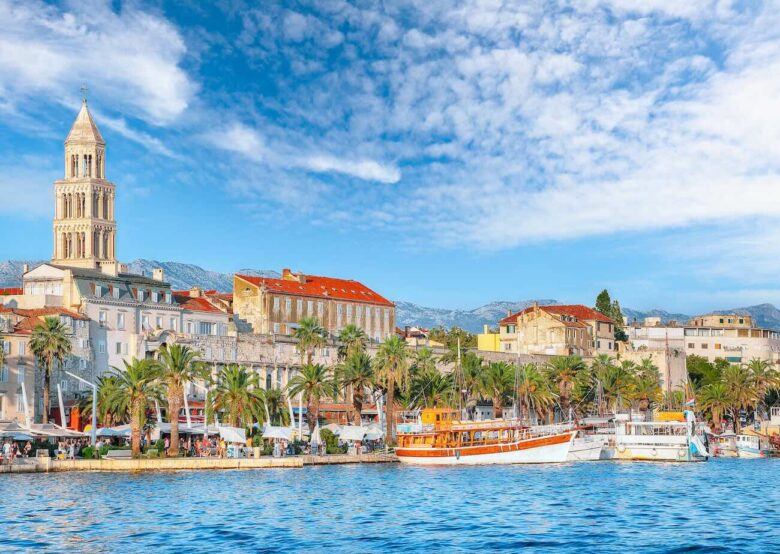
Taking a stroll along La Riva, Split’s famous waterfront promenade, is one of those experiences you simply shouldn’t miss. There is almost always something happening here, from street performances and concerts to parties and beach sports.
Along the waterfront, you will find plenty of restaurants and cafés where you can try local dishes, enjoy a cold beer, or stop for an ice cream on a hot summer afternoon.
You can easily reach La Riva on foot from the city center or Diocletian’s Palace. I enjoyed a lot walking along the promenade in the evening, when it takes on a lively atmosphere.
There are also several shops where you can pick up souvenirs and local handicrafts. And if you’re looking for some nightlife, you’ll find bars and venues with music and parties after dark.
The promenade also provides access to Split’s busy marinas, where you can watch the boats coming and going.
11. Wander Through the Veli Varoš Neighborhood
The Veli Varoš neighborhood, also known as the old fishermen’s quarter, is one of the most charming parts of Split. It connects the area around the old walls with the beaches, and its narrow streets have changed remarkably little over the centuries.
The houses here retain their traditional stone façades and original two-story structures. As you wander through the steep, winding lanes, it is easy to feel as though you have stepped back in time.
The neighborhood was originally home to poorer residents who could not afford to live inside the city walls. Today, many families with deep roots in Split still live here.
Veli Varoš is also home to some cozy restaurants and traditional bars, many of which serve affordable local dishes. You will also come across historic churches, including St. Francis Church and the Church of the Holy Cross.
For me, this is one of the best places to experience a quieter and more authentic side of Split, away from the busiest tourist streets.
12. Enjoy Split’s Beaches
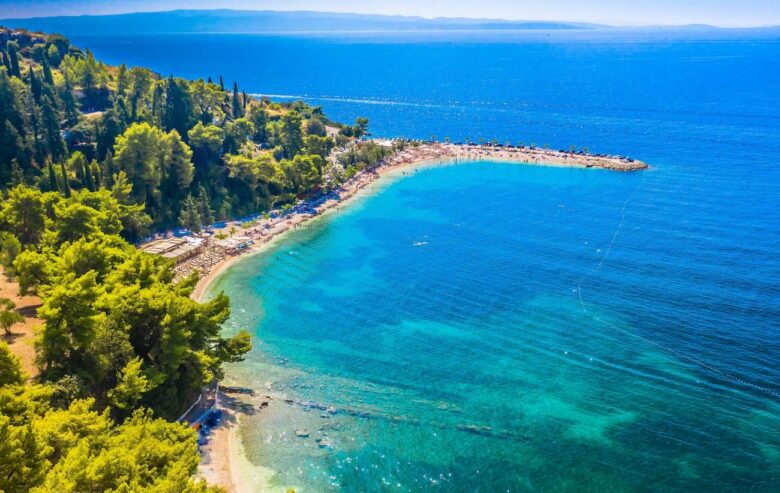
Of course, spending a morning at one of Split’s beaches is another experience worth adding to your itinerary. The Split coastline has both sandy and rocky beaches, so there is something for different types of travelers.
Bačvice is one of the few sandy beaches in Split, which makes it particularly popular during the summer. It can get busy, but its promenade has plenty of restaurants and cafés, making it easy to spend several hours here with the family.
The water in this part of the Adriatic can be cold, even during summer. So don’t be surprised if you see locals swimming when the weather is still cool.
If you prefer quieter and less crowded beaches, get away from central Split and exploring some of the neighboring coastal towns. Several bus routes connect the beaches, so getting around is relatively easy.
13. Visit the Meštrović Gallery
Do you remember the statue of Grgur Ninski, the one that supposedly brings good luck if you touch its thumb? Its creator, the famous Croatian sculptor Ivan Meštrović, has an entire gallery dedicated to his work in Split.
The gallery is divided into an indoor exhibition space and a beautiful sculpture garden, where you can admire many of his works.
Even the building itself is special, as it was designed by Meštrović. Inside and outside, you can discover more than 200 sculptures and prototypes, including works that were never completed.
If you are interested in Croatian art, this is a worthwhile stop. The setting also makes it a pleasant place to explore at a slower pace.
14. Take a Day Trip to Mostar in Bosnia and Herzegovina
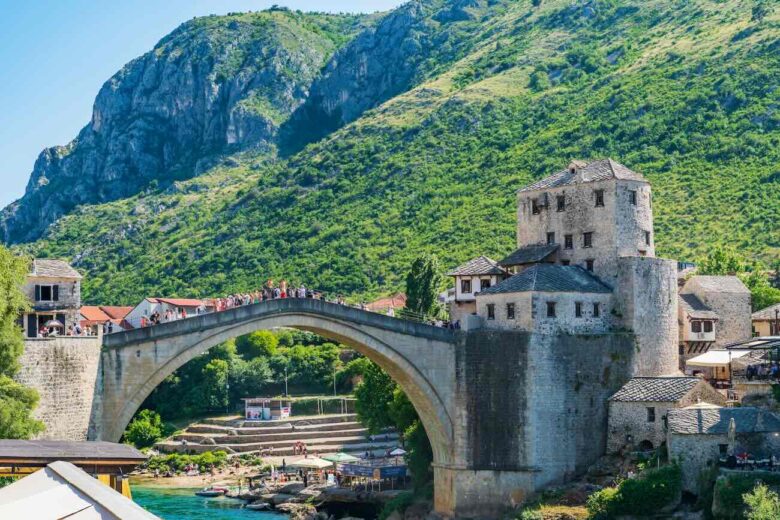
One of the most popular day trips from Croatia is a visit to Mostar in Bosnia and Herzegovina. The city has a fascinating mix of cultural influences, shaped by the Romans, Ottomans, Austro-Hungarians, and Yugoslav period.
Mostar also has a much darker chapter in its history, having been deeply affected by the wars that followed the breakup of Yugoslavia.
The city is usually visited from Split or Dubrovnik. If you don’t have your own vehicle, the easiest option is to book an organized day trip, which takes care of the transportation and logistics for you.
15. Visit the Cathedral of Saint Domnius
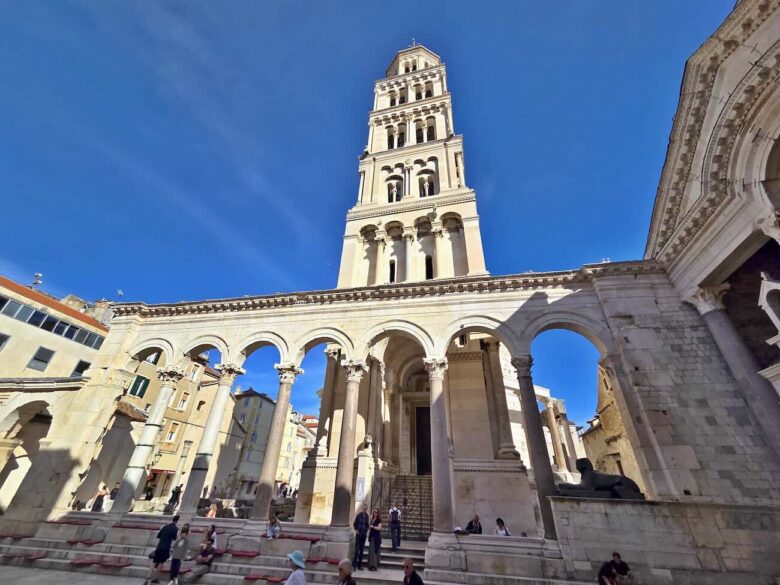
The Cathedral of Saint Domnius stands inside Diocletian’s Palace, in a building that was originally constructed as the mausoleum of the Roman emperor himself.
There is an interesting twist to its history: Diocletian never converted to Christianity. Around the 8th century, however, his mausoleum was transformed into the cathedral we see today.
The building has a distinctive Roman architectural style and is remarkably well preserved. Even its wooden doors, added around the 12th century, have survived.
There is an entrance fee if you want to visit the treasury, crypt, and bell tower. For me, the highlight is climbing the cathedral tower for its panoramic views across Split. The climb takes you more than 50 meters above the city, so be prepared for plenty of stairs.
The tower costs around €2.50 on its own, or around €6 for a full ticket covering all areas of the cathedral.
16. Take a Trip to Trogir
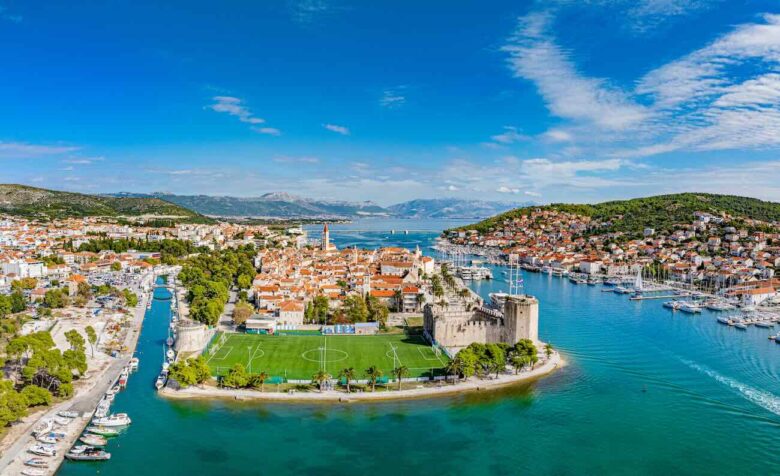
If you have enough time in Split, I highly recommend exploring some of the towns around the city. One of my favorites is Trogir, located just 30 kilometers from Split and easily reached in around 30 minutes by bus or boat.
The town sits on a small island connected to the mainland by a bridge. Its historic center is a UNESCO World Heritage Site, so there is plenty to discover despite its compact size.
You can easily visit Trogir independently, making it one of the easiest day trips to organize from Split. Once you arrive, you can explore the historic center on foot at your own pace.
Walking through its streets feels like discovering a more traditional and picturesque side of Croatia. The historic center is filled with beautifully preserved medieval and Romanesque buildings, churches, and small family-run businesses.
It is an ideal place to spend a morning away from the busy streets of Split.
17. Explore Klis Fortress
Another famous filming location from Game of Thrones is Klis Fortress, and once you see it perched above the surrounding landscape, it is easy to understand why. This remarkably well-preserved medieval fortress stands about 15 kilometers from Split.
The fortress once played an important military role, protecting the region from potential invaders. Its dramatic location and connection to the popular TV series have made it increasingly popular with visitors.
One of the highlights is the spectacular view over Split and the Adriatic, which makes the trip worthwhile even if you are not a Game of Thrones fan.
You can easily visit Klis independently from Split. Buses to Klis depart from Sukoisan Bus Terminal and stop at Klis–Megdan, close to the fortress. The journey takes you through the outskirts of Split and the surrounding villages, making it a straightforward option if you don’t have a car.
I recommend arriving early, especially during the busiest months, when crowds can make it harder to appreciate the fortress at your own pace. Once inside, you can explore the fortress walls, towers and courtyards at your own pace.
Did you know that Klis was used as a filming location for Game of Thrones? Fans may recognize it as the setting for Meereen.
18. Discover the Egyptian Effigy in Diocletian’s Palace
As you may have already guessed, Emperor Diocletian was not exactly known for doing things on a small scale. When visiting his palace, make sure you stop at the central Peristyle square, a striking space surrounded by columns that is occasionally used for performances.
What really catches my eye here, though, is the ancient Egyptian effigy brought from Egypt at the emperor’s request. There were originally 12 of them, but only one has survived.
It is a fascinating sight and creates a remarkable contrast between Egyptian art and Roman architecture. You certainly don’t expect to find something like this inside the heart of a Roman palace.
19. Take a Trip to the Nearby Islands of Brač and Hvar
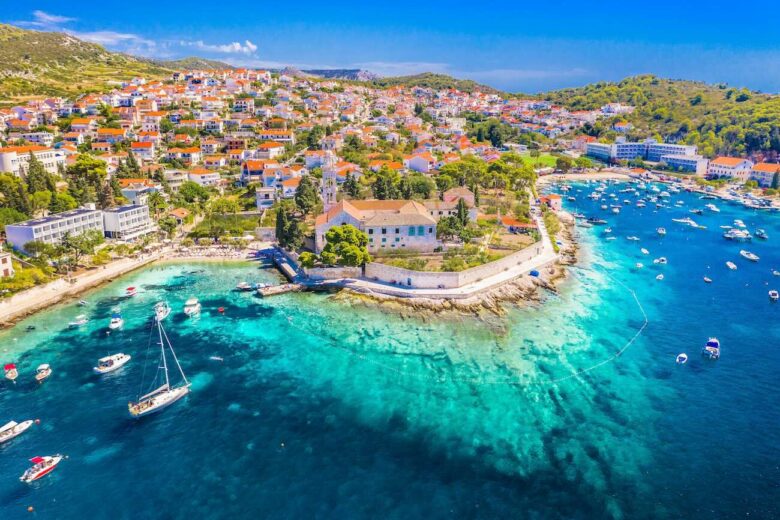
A trip to the nearby islands is another experience worth adding to your Split itinerary. Brač and Hvar are just a short ferry ride away, with regular departures from Split throughout the day.
The journey is relatively affordable, and the islands offer beautiful beaches and crystal-clear waters that can feel much quieter than those around Split.
Once you arrive, take some time to wander through the local villages and enjoy the slower pace of island life. The locals are generally very friendly and welcoming.
On Brač, olive oil production is an important part of the local economy, along with stone extracted from the island’s famous quarries.
On Hvar, Stari Grad is particularly interesting. It is one of the oldest settlements in Croatia, while the island is also known for tourism, fishing, and its beautiful lavender fields. Don’t miss Hvar Fortress either, especially for its views.
20. Discover Cindro Palace
As you explore Split, pay attention to the buildings around you and you’ll notice that many were once grand aristocratic palaces. Some are now museums or government buildings, while others remain remarkably well preserved.
Cindro Palace is a good example. It is easy to walk past without noticing, as it is tucked away among the narrow streets of the historic center.
The palace belonged to the Cindro family, an influential family with strong military connections. Dating from the 17th century, it has retained much of its original character and is an interesting reminder of Split’s aristocratic past.
21. Admire the Architecture of Republic Square
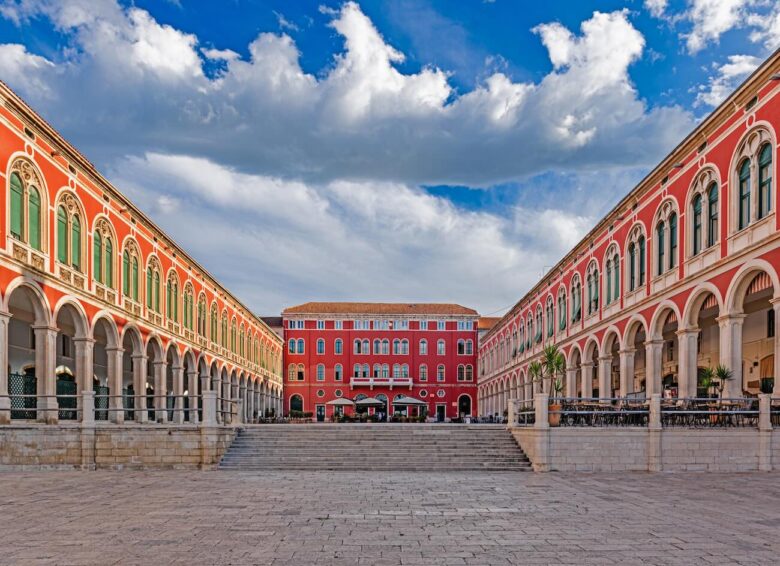
Republic Square is another place where Split’s history and architecture come together. The square is surrounded by Neo-Renaissance buildings with reddish façades and a distinctly Venetian character.
The design was inspired by St. Mark’s Square in Venice, with elegant arcades separating the square from the entrances to the surrounding buildings.
Today, the square is a lively meeting place, with plenty of restaurants and cafés where you can sit outside and watch the world go by.
During the warmer months, it becomes even more atmospheric, with concerts and cultural events taking place here. The Split Festival in July is one of the highlights.
22. Discover Split’s History at the Museum of Croatian Archaeological Monuments
If you’re interested in history, the Museum of Croatian Archaeological Monuments is well worth a visit. Best of all, admission is free.
Located in Split, the museum houses a remarkable collection of archaeological remains discovered throughout Croatia. More than 20,000 historical pieces are preserved here, with a selection displayed in the permanent exhibition.
The collection focuses particularly on the medieval period and includes armor, weapons, jewelry, tools, and coins.
I would especially recommend it if you’re traveling with children. It is an interesting way to make Split’s history feel more tangible and offers a quieter break from the busy streets outside.
23. Swim at Krka Waterfalls
If you decide to skip Plitvice Lakes because of the distance, Krka National Park is an excellent alternative. Its waterfalls and lush surroundings make it one of the most popular day trips from Split.
The scenery is beautiful and incredibly green, and during the summer months, the opportunity to swim in the crystal-clear waters makes the experience even more appealing.
If you’re looking for a combination of nature, waterfalls, and a refreshing swim, this is one excursion I would definitely consider while staying in Split.
Recommended tour: Krka Waterfalls Trip with Boat Cruise and Swimming
24. Admire the Beautiful Temple of Jupiter
Emperor Diocletian was a devoted follower of the Roman gods, and the Temple of Jupiter is one of the clearest reminders of his beliefs.
The temple was built as part of the palace complex and is now home to the crypt dedicated to Saint Thomas and forms part of the cathedral’s baptistery.
Despite the changes over the centuries, you can still see distinctive Roman architectural elements, as well as another Egyptian effigy brought to Split by Diocletian.
For me, this is one of the most interesting places in the palace because it shows how different religions and traditions have shaped Split over the centuries.
25. Explore the Salona Archaeological Site
Just 6 kilometers from Split lies one of Europe’s largest and best-preserved archaeological sites: the ancient city of Salona.
Salona was one of the most important cities in the region and eventually became the Roman capital of Dalmatia. At its height, it was home to more than 60,000 people, an impressive population for the time.
There is an entrance fee, but I think the visit is well worth it. Walking among the ruins gives you a fascinating glimpse into everyday life in Roman Dalmatia.
Among the remains, you can see the ruins of a huge amphitheater, as well as a Roman forum, theater, thermal baths, and other ancient structures. It’s an especially interesting excursion if you want to explore a side of Split’s history beyond Diocletian’s Palace.