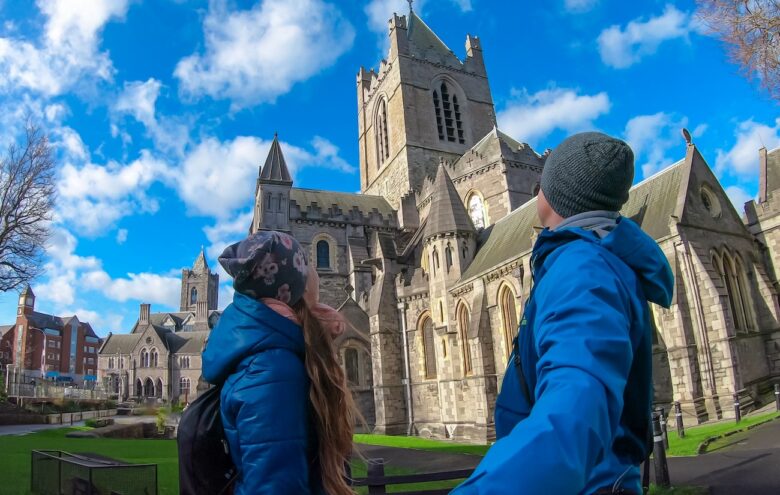
With so many different things to see and do in Dublin, the city is as popular with weekend stag and hen parties as it is with short-break visitors wanting to enjoy its history and culture.
Dublin is a city that fascinates me, both for everything there is to see and for its unique atmosphere. I’ve visited it several times, and I hope to return in the future. To me, it’s the perfect weekend getaway.
Capital city of the Irish Republic, Dublin offers a millennium of history. Enjoy unique Georgian, Victorian and Edwardian architecture with an Irish twist. Explore its straight roads, large squares, iconic monuments, fabulous parks, museums and galleries.
Check out its concert halls, music venues, churches and cathedrals. And its famous restaurants, pubs, and clubs.
Stir in a little of that world-famous Irish hospitality. Add a nip of Irish whisky or a glass of the famous Guinness. And you have the makings of a short-break holiday unlike anything else you’ll experience around the European city hotspots.
To help you choose the things you want to see in Dublin, in no particular order, I’ve put together this list of 25 of the best things to do in Dublin, to help you make the most of your visit to the centre of Irish blarney.
On my last trip to Dublin, I stayed at the Point A Hotel Dublin Parnell Street. It’s a modern, well-located hotel that offers excellent value for money, especially considering Dublin’s typically high accommodation prices.
25 Best things to do in Dublin
1. Kilmainham Jail and Museum, a history of Irish struggles
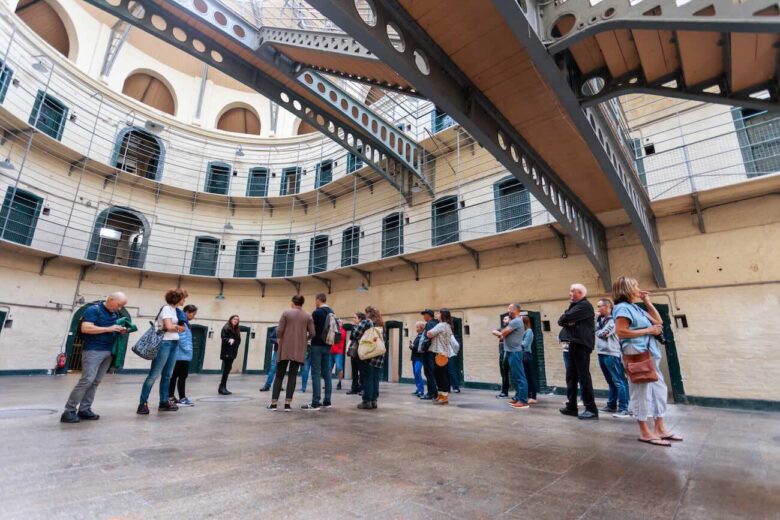
Located on Inchicore Rd, Kilmainham, Dublin 8, Kilmainham Jail opened for business in 1796.
For over 100 years, it was home to hundreds of men, women and children convicted of minor misdemeanours and petty crimes, right up to political activists involved in the country’s struggle for independence.
Some of the most prominent activists from the rebellion of 1798, the Easter Uprising of 1916, the 1919/21 English-Irish War and the 1922/23 Irish Civil War found themselves incarcerated in Kilmainham, including the leaders of the 1916 uprising, many of whom were executed by firing squad in the prison’s Stonebreaker’s Yard..
The notorious jail finally closed in 1924. In the 1960s it was restored by the Kilmainham Jail Restoration Committee, and passed to the country in 1986.
The jail and museum are guided tours only, and include a number of temporary exhibitions throughout the year. With limited numbers per tour, pre-booking online is recommended to ensure a slot. The tour takes approximately one hour.
2. Dublin’s Museum of Literature, from the past to the present
Located at 85–86 St. Stephen’s Green, Dublin, UCD Newman House was home to the Catholic University of Ireland, founded in 1854, and the forerunner of University College Dublin.
Among several famous writers who studied at the university was James Joyce, who graduated in 1902 with a BA.
Now housing Dublin’s interactive Museum of Literature, it is a must see in Dublin for those with a passion for the written word and Ireland’s famous authors.
The museum is a collaboration between the University College Dublin and the National Library of Ireland, offering literary treasures and absorbing exhibitions.
During your visit you can also enjoy a coffee and snack in the garden café. Tickets are available online or from the Museum of Literature.
3. Little Museum of Dublin, a history of Dublin compiled by those who live there
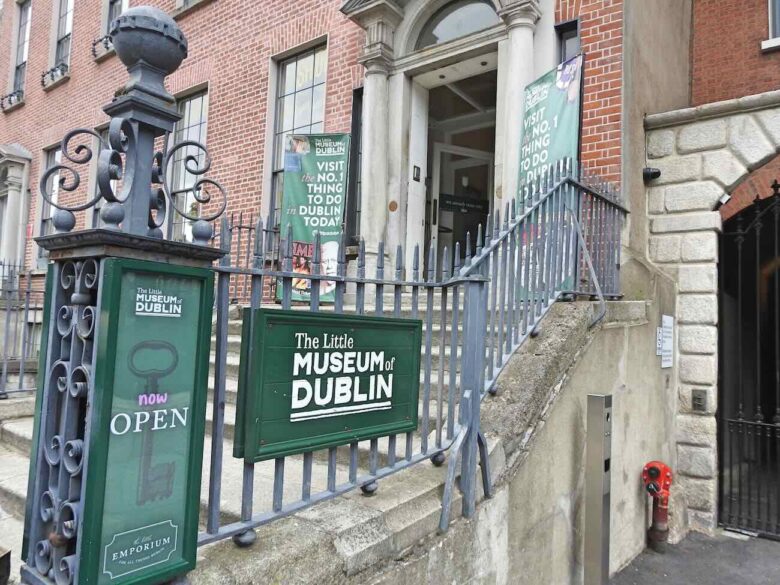
Housed in an old 18th-century Georgian townhouse on the north edge of attractive St Stephen’s Green, the Little Museum of Dublin provides an insight into Dublin’s modern history, as portrayed by over 5,000 artefacts and items donated by native Dubliners.
Established in 2011, the exhibition charts the local history of the city by the people who lived through it, and has been voted ‘Dublin’s Best Museum Experience‘ by The Irish Times and termed ‘Irreverent and rather wonderful‘ by The Sunday Times.
The museum is open from 9.30am to 5pm six days a week and last entry at 4:30pm. Tickets are available at the door or online.
4. St Stephen’s Green, a relaxing park in the heart of the city
After a visit to the museum, why not recharge the batteries with a stroll around St Stephen’s Green?
Opened in 1880 for the residents of Dublin City, St Stephen’s Green is a Victorian-style park which has been maintained true to its original design.
The park encompasses 22 acres in the city centre, and includes tree-lined walks, herbaceous borders, shrubberies, rockeries and multi-coloured flower beds. It also contains a large lake and an interesting garden for the visually impaired.
5. Shop ’til you drop in Dublin’s main shopping areas
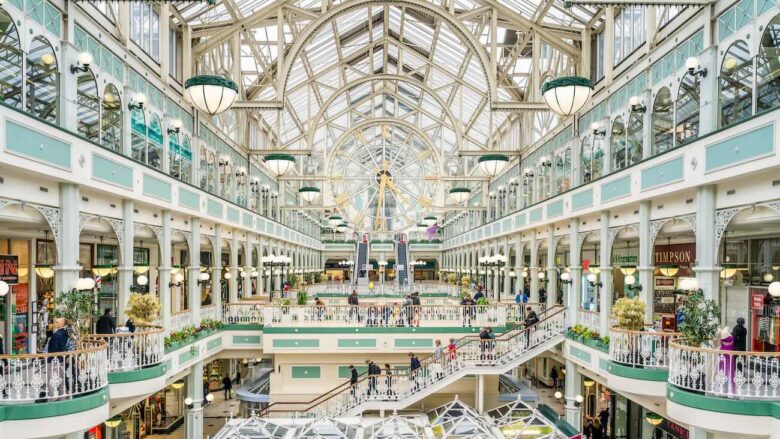
Stephen’s Green Shopping Centre is located opposite St Stephen’s Park, at the top end of Grafton Street. After a bumpy start and numerous ownership changes during the planning and early building stages, the complex finally opened its doors in 1988.
It is an attractive undercover complex of over 100 units, including the likes of Boots, Dunness and TK Max.
Grafton Street and Henry Street are the two main pedestrianised shopping streets in the city centre, where you will find Irish and UK popular high street brands alongside the big international names.
Just a five-minute stroll from Grafton Street, George’s Street Arcade is one of Ireland’s oldest city markets.
Ideal when the weather is a little inclement, this undercover Victorian market is a great place to hunt out those holiday mementoes and souvenirs as you browse numerous retro clothing boutiques, vintage jewellery stores, collectables, vinyl records and much more.
If you want to turn an hour or two’s window shopping into something more exotic, head for Dundrum Town Centre on the edge of the city.
Said to be Ireland’s largest shopping/entertainment venue, the complex houses over 100 retail units, 40 cafes and restaurants, 12 cinemas, two nightclubs, a bar, a theatre, a medical centre and a tourist information office.
6. The Guinness Storehouse, enjoy a taste of Ireland’s famous export
Located in the centre of St. James’s Gate, Dublin 8, the Guinness Storehouse has been brewing Guinness and associated drinks since 1759.
In 1904, the plant was opened to the public. Spread over seven floors, the self-guided tour covers the history of the Guinness brand, the ingredients and why they are used, and the fermentation process.
In the tasting rooms you can sample the various stouts and their different flavours. In addition, the third floor is filled with advertising posters tracing Guinness’s celebrated advertising campaigns through the years.
You can also enjoy a glass at the top floor Gravity Bar, while you take in the 360° views of the city centre.
Other popular tours of Dublin’s famous breweries and distilleries include:
- The Dublin Liberties Distillery, established in 2019
- Roe & Co Distillery at Liberties district, Dublin 8
- Teeling Whiskey Distillery, also in the Liberties district
- Pearse Lyons Distillery, housed in the old St James Church on James Street
- Jameson Distillery on Bow St
Opening hours for the Storehouse: Week Days 10.00am to 7.00pm (last admission at 5pm) Weekends 9.30am to 5.00pm
7. Dublin’s Reborn Docklands, a treat for the whole family
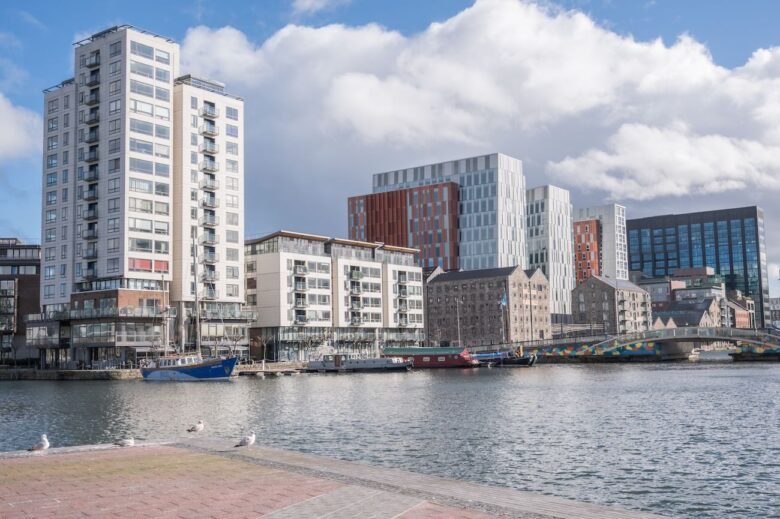
From rundown docks to thriving high-tech businesses, history, culture and leisure activities.
Climb aboard the replica Jeanie Johnston, a wooden sailing ship that made 16 voyages across the Atlantic to North America, carrying passengers fleeing the Irish Potato Famine of 1845 to 1852.
Visit EPIC, the Irish Emigration Museum, and learn the history of Irish emigration through the centuries in 20 interactive galleries. The museum won Europe’s Leading Tourist Attraction at the World Travel Awards 2019, 2020 and 2021.
Do you have Irish roots? Trace your family tree at The Irish Family History Centre. Pass details of your name, date of birth and marital status to the staff and find out just how Irish you might be.
Get your feet tapping with a visit to Windmill Lane Recording Studios. A working recording studio for over 40 years, it has recorded tracks with many of today’s big stars such as Lady Gaga, Metallica and U2.
Enjoy a host of water sports, such as paddle boarding, kayaking and windsurfing at Surfdock Watersports in Grand Canal Dock. All equipment is provided, and training is available.
If you’ve had fun in an escape room, you can do escape boats at Dublin Docks, cracking the codes and solving the riddles. You have one hour to get back to dry land.
Finally, to stave off the hunger pangs, you will find plenty of snack bars, cafes, restaurants and bars dotted around the quayside. If you have young family members, plan to spend at least a half-day enjoying the many attractions.
8. Viking Splash Tours, a unique way to explore Dublin
Located at St Stephen’s Green, North, Dublin 2, Viking Splash Tours are a fun and novel way to enjoy the things you want to see in Dublin. Especially if you have children over three.
Old WW2 amphibious DUKWs are dressed up to (loosely) resemble Viking long-boats, and come complete with Viking helmets.
The tour lasts approx. seventy-five minutes allowing for traffic, and takes in many of the city sights, before sliding into the water at the Grand Canal for a 25-minute water-born tour around the docks.
This tour is becoming increasingly popular with visitors looking for different things to do in Dublin, so early arrival/booking is recommended.
9. Explore the Temple Bar District during the day
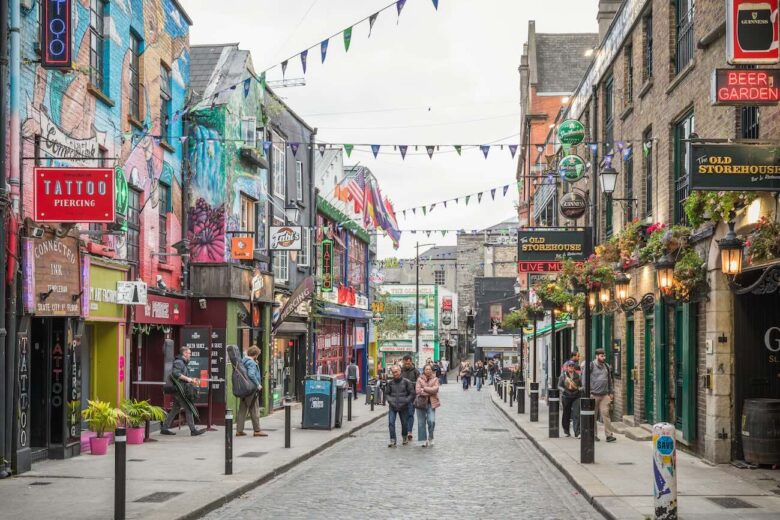
If you prefer daytime things to do in Dublin, take a stroll through the Temple Bar District. Mention Temple Bar to most new visitors to Dublin and they rightly think of pubs, bars, clubs and late-night partying – but the district is so much more than that when visited during the day.
Considered the bohemian area of the city, the old cobbled streets and narrow alleyways are full of small independent shops, jewellery makers, retro fashion boutiques, small workshops and places to purchase personalised souvenirs and mementoes.
Whatever day you choose to visit, you will likely find pop-up markets selling everything from home goods to classic clothing, bric-a-brac, books and souvenirs.
Add to that several art galleries, numerous cafes and eateries and a few daytime bars, and you have something for the whole family during your daytime visit.
10. Temple Bar at night, get ready to party
As the small shops and businesses begin to close for the day, Temple Bar’s many pubs, bars, restaurants and clubs begin to open. The Temple Bar Pub has been standing at the front of the district for over 180 years, and is the starting point for many a boozy stag or hen night out.
That said, as Dublin’s most famous boozer, most visitors want to enjoy at least one drink at the bar. If this is you, a visit as the pub opens is the best plan, where you can enjoy a tipple without having to stand shoulder to shoulder with other drinkers at the bar.
Temple Bar isn’t limited to a glass of the black stuff either. It is home to Ireland’s largest collection of over 450 rare whiskies from around the world, as well as craft beers, spirits and wines.
Temple Bar might be the accepted centre for Dublin’s night time entertainment, but on almost every street corner, you will find traditional Irish pubs.
Dublin pubs offer quiet evenings where you can listen to traditional Irish folk music, enjoy the craic (banter), tap your feet to the latest upcoming rock band, and everything in between.
11. National Leprechaun Museum, enjoy a little Irish folk law
If you’re debating what to do in Dublin with the whole family, the National Leprechaun Museum is a good place to start.
Just a few hundred metres from Temple Bar, the museum of the little people opened its doors in 2010, and guided tours are available through both daytime and evenings.
The whole family will love the stories of what their favourite Leprechaun, bearded and typically dressed in a green or red costume with a top hat, has been up to through the centuries.
The museum is in 12 sections, with areas of woods and forests, wishing wells, pots of gold and one with oversized furniture, to give you an idea of how the little people live. (Yes, they’re still around – so I’m told).
12. The National Wax Museum Plus, featuring some of Dublin’s most famous
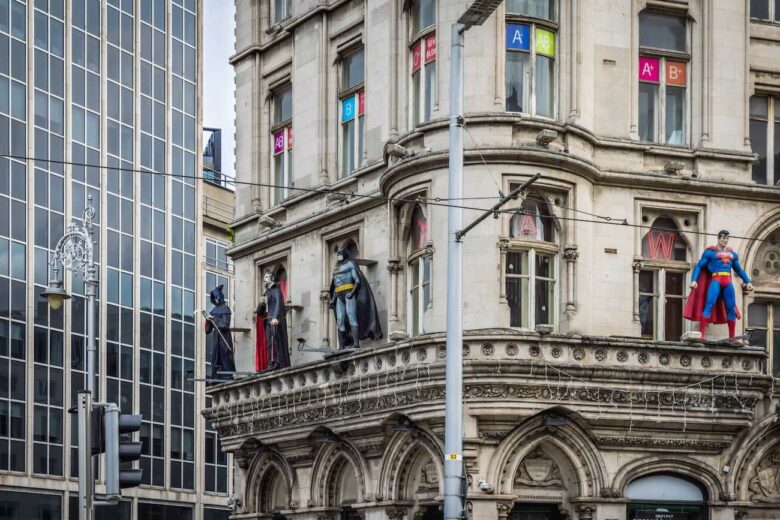
Another great thing to see in Dublin with the kids is the National Wax Museum Plus. The museum opened its doors to the public in 1996 and is divided into several different themes.
In the Children’s Fantasy World, the kids can get up close to the Flintstones, Sleeping Beauty and Harry Potter, along with other fairy tale characters.
The Grand Hall celebrates some of Ireland’s most famous, such as Phil Lynott, Liam Neeson and U2.
Proud of your singing voice? In the Wax Factor Studio, you can record your favourite music video in the museum’s recording studio and follow in the footsteps of the likes of Snow Patrol and REM.
The Chambers of Horror. Not for the faint-hearted. Take a walk on the dark side, with scary horrors waiting around every corner.
The museum is open seven days a week from 10.00am to 7.00pm
13. Trinity College, Ireland’s famous seat of learning
Founded in 1592 by Queen Elizabeth I, Trinity College sits on 47 acres of cobbled paths, squares, gardens and wooded parks. Its impressive list of students includes, among others, Jonathan Swift, author of Gulliver’s Travels, Bram Stoker of Dracula fame, Samuel Beckett and Oscar Wilde.
It is also famous for its priceless artefacts and literary treasures like the Book of Kells and the books of Durrow and Armagh, as well as an ancient Irish Harp. In the Long Room are over 200,000 of the college’s oldest books.
Early booking for the Book of Kells tour is recommended to avoid the long queues. The tour also includes a visit to the grounds of Dublin Castle.
14. Dublin Castle and the Chester Beatty Library
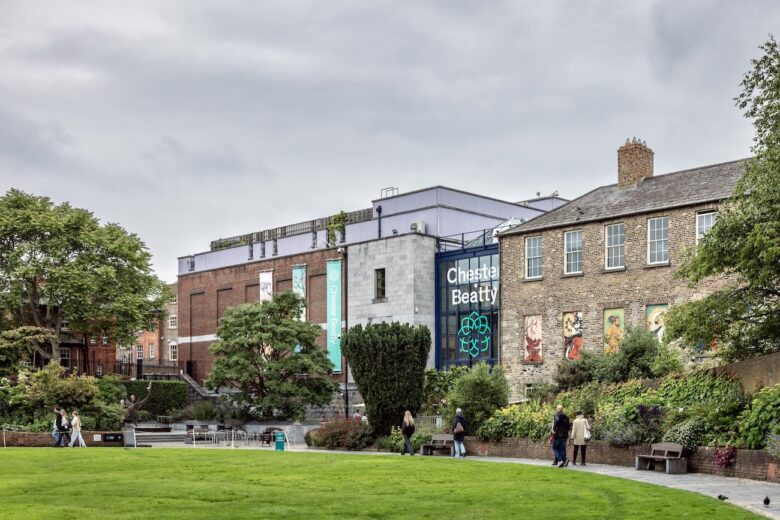
Constructed in the 13th century, Dublin Castle sits on Dame Street, Dublin 2, a short walk from Trinity College.
Originally a medieval fortress, in 1534, it was besieged by the Irish rebel Silken Thomas. With just three cannons at his disposal, he eventually retreated to his castle, where British troops later arrested him.
During the 700 years of British rule, the castle was used as a centre of administration until 1922, when Irish Independence was declared. Today, the castle is a centre for ceremonial visits, exhibitions, and live concerts held in the grounds.
Founded in 1953, the Chester Beatty Library in the castle contains an impressive collection of items.
Oriental art, manuscripts, texts and books from the 14th and 15th centuries. Islamic prints, art from the Far East, 12th and 13th-century Sanskrit manuscripts, and Babylonian clay tablets dated to 2,300 BC.
You can also view medieval European and Renaissance manuscripts. Papyrus texts from Egypt. Buddhist paintings, miniatures from Turkey and Persia (Iran), prints from Japan and Chinese dragon robes.
Dublin Castle is open seven days a week and on Bank Holidays from 9.45am to 5.45pm. Self-guided tickets are available online.
Guided tour tickets for the State Apartments, Medieval Section and Chapel Royal can be bought from the ticket office on the day of your visit.
15. The Irish Museum of Modern Art, one of Ireland’s top galleries
For lovers of contemporary art, visiting the Irish Museum of Modern Art is a must do in Dublin. The impressive building was built between 1860 and 1864, and named the Royal Hospital Kilmainham. Designed to house up to 400 homeless and injured veterans, during its 250-year history the building rarely housed above 20.
Passed to the Irish Free State by the British in 1922, in 1930, it became the Garda Headquarters for the next 20 years. With the building laying empty for the next 30 years it fell into disrepair until, in 1980, plans were approved to refurbish and renovate the site.
With renovations completed, from 1984 to 1990 the building was used for various cultural events and exhibitions until, in 1991, it opened as the first Museum of Modern Art in Ireland.
Today, the museum exhibits over 3,500 post-war works by Irish and overseas artists, plus temporary exhibitions. The museum also has artists’ studios on site and a café.
Opening hours are from 10.00am weekdays and 12noon Saturdays, Sundays and Bank Holidays, to 5.30pm every day of the week.
16. The National Museum of Archaeology
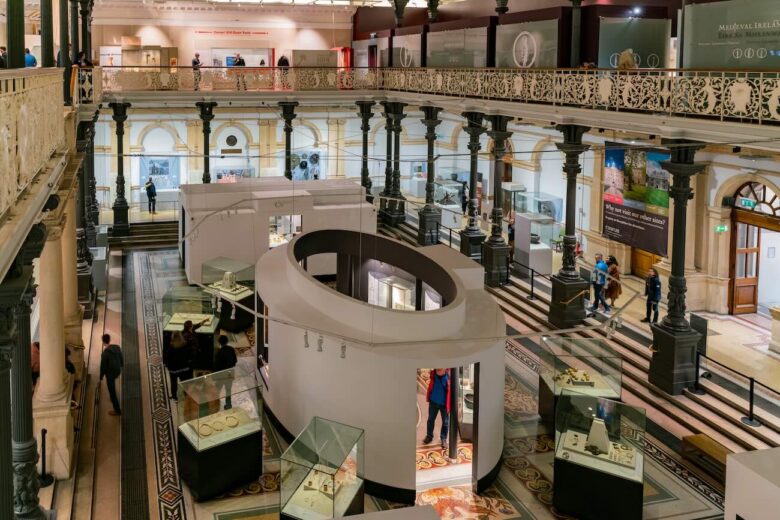
Sitting on Kildare Street close to the National Library, the National Museum is one of a group of four museums specialising in Arts and History, Country Life, Natural History and this one, Archaeology.
Opened in 1890, the permanent exhibition transports you back to 7,000 BC. with artefacts such as St Patrick’s Bell, Tara Brooch, and the Ardagh Chalice from the Celtic era.
You can view prehistoric Ireland’s old gold jewellery dating from 2200 BC to 500 BC and one of the largest collections of prehistoric gold in Europe. Personal items, pottery and tools used by Neolithic farmers are also on show.
The museum covers medieval Irish life from 1150 -1550 and how society comprised the noble classes, common people and the church.
Viking Ireland is a highly popular section, and includes Viking objects from excavated graves from the 9th and 10th centuries, excavated settlements circa the 10th and 12th centuries, and from the latest digs in the city at Wood Quay.
The other three museums are:
- The Museum of Decorative Arts & History – Collins Barracks, Dublin
- The Museum of Country Life – Turlough Park, Castlebar, Co. Mayo
- The Natural History Museum – Merrion Street, Dublin 2
All these museums provide a fascinating insight into old Ireland, and best of all; they are all FREE to enjoy.
17. National Gallery of Ireland – Irish and European art from the Middle Ages
Located at Merrion Square West, Dublin 2, at the bottom of Kildare Street, the National Gallery of Ireland opened its doors in 1864, with new wings added in 1903, 1968 and 2002.
The exhibition is an eclectic mix of Irish and European art from the Middle Ages to the present day. Spread over four floors; the presentation has seven rooms highlighting Irish and Italian painters, the Shaw Room, Baroque Room and the Yeats Museum, plus numerous temporary exhibitions are held throughout the year.
There is also a gallery shop and a pleasant café where you can rest and enjoy the atmosphere.
Entrance to the main gallery is free, with some temporary exhibitions incurring a charge. Opening times through the week vary, and full details plus current exhibitions can be found here:
18. Merrion Square, enjoy a little downtime in this beautiful park
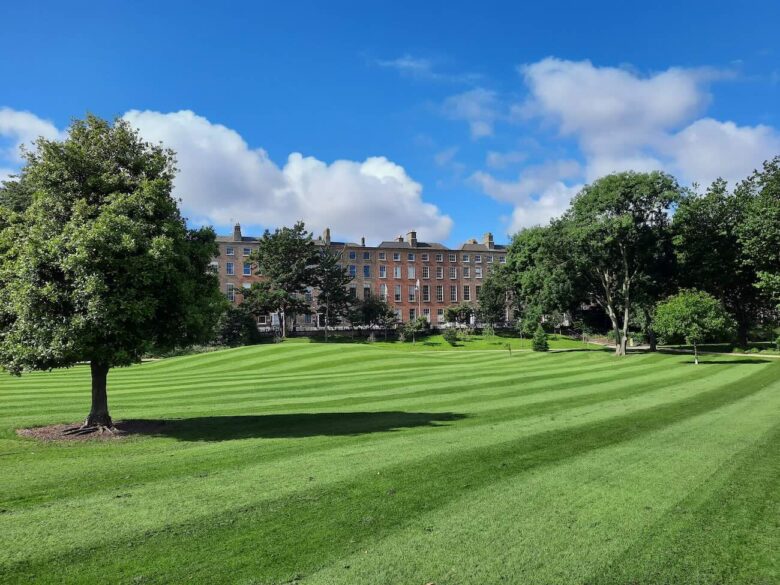
Walk out of the National Gallery of Ireland, and you’re standing on the edge of Merrion Square. A large, grand Georgian square, it is bordered on three sides by tall, imposing Georgian properties.
At one time, they were the homes of wealthy English and Irish businessmen and such notables as W B Yeats and Daniel O’Connell. Today, most houses have been repurposed for office space. On the fourth side of the square is the garden of Leinster House.
The pretty and picturesque central park area is often featured on those wish-you-were-here holiday postcards that find their way around the world.
The park is one of lush green grass, walkways, shrub and flowerbeds, small copses and tree-lined areas. You’ll also find a statue of Oscar Wilde lounging on top of a large boulder.
If you visit on a Saturday or Sunday morning, make your way towards the park’s perimeter railings, where you can enjoy the different styles of local artists displaying their works.
19. The GPO Witness History Museum and O’Connell Street
Although over 300 years old, the name O’Connell Street wasn’t officially recognised until 1924. Having grown and prospered over the years, new affluent properties and prestigious businesses began to appear along the street, and in 1814 the General Post Office was built.
Fed up with the British occupation, trouble had been bubbling under the surface for years and in 1916 exploded to the surface. Although the rebels surrendered to British troops, the General Post Office on O’Connell Street was at the centre of the unrest and bullet holes can be seen in the brickwork to this day.
Although still Ireland’s main post office, the GPO building also contains a museum timelining the events leading up to the unrest and the rebellion itself.
Opened in March 2016, the GPO Witness History Museum charts the events that led up to the unrest, the unrest itself, and other major political events leading up to the Northern Ireland peace process through interactive displays.
Lauded by numerous high-profile travel mags and industry awards bodies, if you have an interest in Irish history, a visit should be high on your itinerary of the best things to see in Dublin.
Opening times are 10.00am to 5.00pm Tuesday through Saturday.
20. Phoenix Park, something to do in Dublin for the whole family
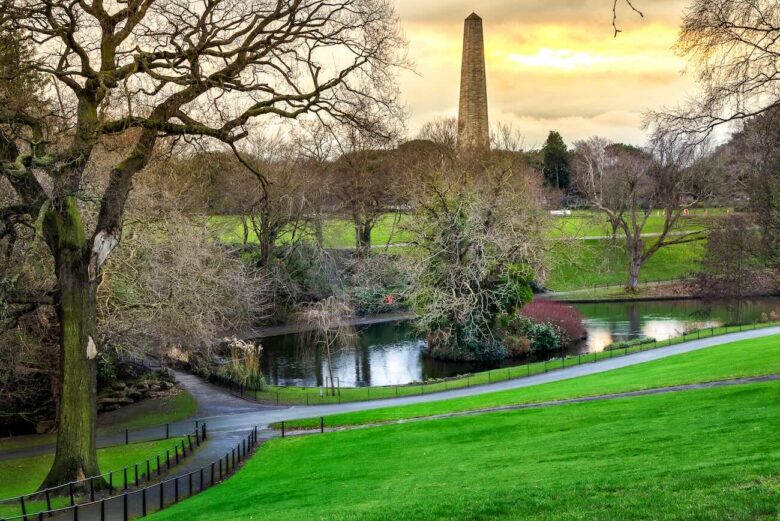
Just a mile from O’Connell Street, at 1,750 acres in size, Phoenix Park is one of the largest enclosed parks in Europe. Established in the 1660s as a hunting park, it was eventually handed over to the people and opened to the public in 1747.
The park is a haven for wildlife, and maintains a large herd of fallow deer. Besides its flora and fauna, it is popular with residents for a host of leisure activities, from walking, jogging and sports, to outdoor yoga and relaxing with a picnic.
For visitors, the park has a visitor centre which includes a walled working kitchen garden, a café/tea rooms, and an exhibition of the park’s history dating back to 3500 BC.
Other places of interest in the park include the Irish Premier’s official residence, the home of the American Ambassador to Ireland, and Farmleigh House. Built in the 1800s and standing in its own 78 acres, it was bought by the state in 1999 from the Guinness family.
The park’s main gates at Castleknock Gate and Parkgate Street are open 24/7, with side gates opening from 7.00am to 10.45pm.
21. Dublin Zoo, one of the best things to do in Dublin with the kids
One of Phoenix Park’s biggest draws, especially with the youngsters, is Dublin Zoo which sits on the edge of the park.
Established in 1831, it is the second oldest zoo in Europe, and attracts over a million visitors annually.
Very involved in conservation, the zoo is home to numerous large cats, Asian elephants and hippos, penguins and sea lions, and bats and monkeys. It also has a reptile house, cafes, a restaurant, a petting farm and kiddies play areas.
At different times throughout the day, keepers give talks about the life, history and husbandry of the animals they look after.
The zoo is open from 9.30am to 5.00pm every day. A visit to the Dublin Zoo website will provide the times of the talks and, best of all, booking online will secure a 15% discount on ticket prices.
22. Christ Church Cathedral, a history dating back to 1028
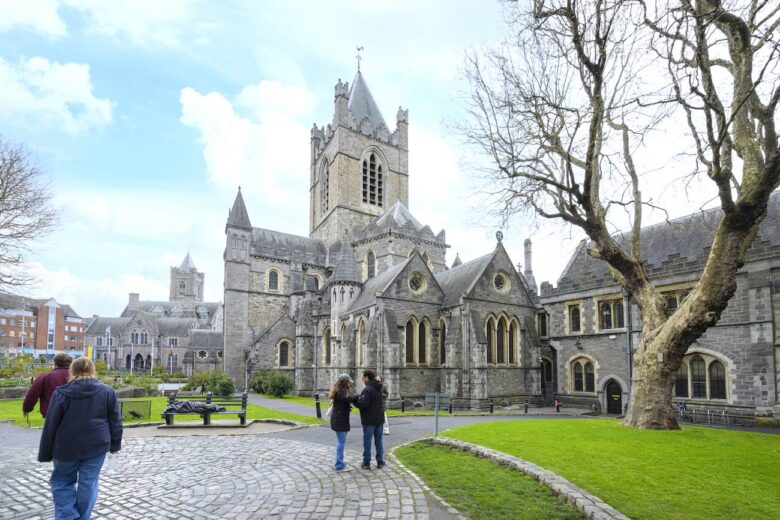
Located at Christchurch Place, Dublin 8, the original church was constructed of timber on the site in 1028 by the Viking King Sitric Silkenbeard, and is said to be Dublin’s first church.
It was rebuilt in stone in the 12th century by the Normans and extended in the 13th century.
In the 16th century it partially collapsed, and it wasn’t until the 19th century that renovations finally took place. Nonetheless, parts of the large, 13th-century crypt, running the length of the church, still survive.
You can also view a replica of the 14th-century tomb of the Norman conqueror Strongbow, interred elsewhere in the church. The exact location was lost when the roof collapsed in the 16th century.
You can book cathedral tickets online at:
23. Dublinia, the kids will love going back to the time of the Vikings
If you’re looking for things to see in Dublin to keep the children amused, add a visit to Dublinia to your do in Dublin list.
Located in the two-storey Synod Hall by the cathedral, Dublinia is a living history museum that takes you back to the days of the Vikings and medieval Dublin.
The whole family will get carried into the past with recreations of Viking traditions, activities and realistic street scenes.
Look at life on a Viking longship and the weaponry available, and visit a cramped Viking home. Learn of the myths and legacies of the Viking conquerors as you and the kids dress for the part in a variety of Viking costumes.
From there, you can learn about life in medieval Dublin, see the sights, hear the sounds and smell the Dublin of 900 years ago. Learn about what constituted a crime and what the punishment was.
Learn how the common people lived, and of the various diseases that plagued the city and what treatments were available.
Full details of opening times and tickets can be found at:
24. The Irish Rock ‘n’ Roll Museum Experience, a must-visit for music lovers
Located on Curved Street in Temple Bar, The Irish Rock’ n’ Roll Museum Experience is far more than just another museum.
The Irish Rock’ n’ Roll Museum Experience is located in the same building as Temple Lane Recording Studios, established in 1984, and the Button Factory music venue.
It’s all about diverse musical memorabilia such as guitars used by the Pogues, a pair of Michael Jackson’s pyjamas (yes, really), and a note left on a school notice board when Larry Mullen was trying to form what would eventually become U2.
In another room, you can watch a short vid of how the Clancy Brothers found fame and fortune on America’s Ed Sullivan Show. Where the inspiration for legendary Riverdance came from.
Johnny Logan winning his three Eurovision song victories, and the birth of The Dubliners in 1962 at O’Donoghues, on Baggot Street.
Another room is set up for jamming sessions. Here any visitor can pick up an instrument and begin their own jamming session. Plenty who have visited this room previously arrived as strangers, and left planning how to start a new band.
Finally, you will visit the Apollo Recording Studios and learn of its history and that of Phil Lynott of Thin Lizzy fame, with a number of his guitars and other memorabilia donated to the museum.
Full details, opening times and tickets can be found here.
25. Croke Park Stadium, home of the Gaelic Athletic Association
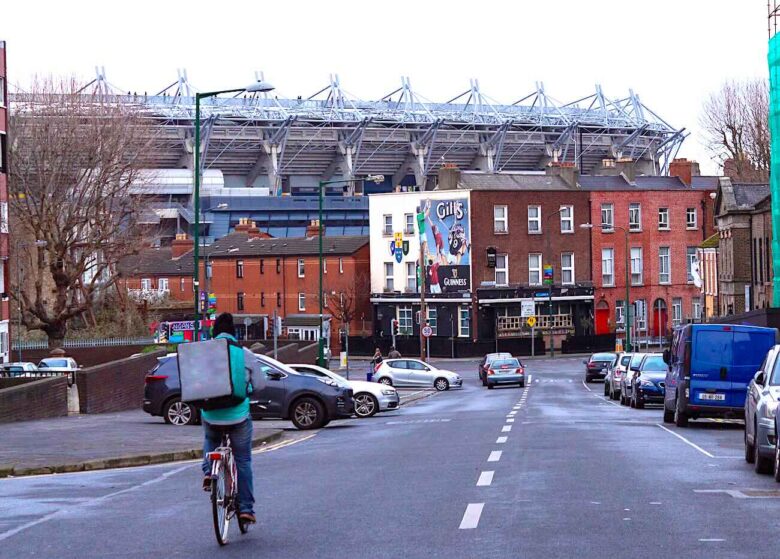
Located on Jones’ Rd, Drumcondra, Dublin 3: For over 100 years, Croke Park has been entertaining fans of Gaelic football, hurling and field sports, as well as football, rugby, athletics, American football and numerous other cultural and international events.
With an 82,300-spectator capacity, it is the largest stadium in Ireland and one of the largest in Europe.
A surprising fact is, in these days of money will buy you anything, the GAA has retained its amateur status from day one, and guards its reputation with a passion that filters down to the volunteer groups of staff and marshals who attend every time the stadium is open.
Not only is Croke Park a main sports venue, but it also hosts many open-air concerts. Elton John, Billy Joel, Red Hot Chili Peppers, Taylor Swift, One Direction, Garth Brooks, Coldplay, Beyonce, Take That, Westlife and Michael Bublé have all headlined here to capacity crowds.
For visitors, the Croke Park complex includes a Meeting and Events Centre, a fascinating Museum, Stadium Tours and the scary Ericsson Skyline Tour, for visitors with a head for heights.
Details of events, concerts and ticket prices can be found at: https://crokepark.ie/matchday/tickets
Although not mentioned in this list, if you’re a lover of street parties, arrange your visit to Dublin around March 17th. St Patrick’s Day around the world is celebrated in green and red costumes, top hats, Randy Leprechaun t-shirts, festivals, parades and copious amounts of anything alcoholic.
It is a time when everyone wants to be Irish, even if just for the day. So why not push the boat out, and celebrate it in the city of one hundred thousand welcomes.