
Landing in Rio de Janeiro is one of those moments you never forget. As your plane descends, you’ll catch glimpses of Guanabara Bay, Sugarloaf Mountain and the city’s endless coastline, a spectacular introduction to one of the world’s most beautiful destinations.
The good news? Getting from Rio de Janeiro Airport to the city centre is much easier than many first-time visitors expect.
Rio de Janeiro Galeão International Airport (GIG) sits on Ilha do Governador, around 20 km (12 miles) north of Downtown Rio, and is well connected by public transport, taxis, ride-hailing services and private transfers.
Before planning your journey, it’s worth knowing that Rio has two airports, each serving a different purpose.
- Rio de Janeiro Antônio Carlos Jobim International Airport (GIG), better known as Galeão or RIOgaleão, is the city’s main international gateway. It handles almost all long-haul flights as well as many domestic routes and has two modern passenger terminals.
- Santos Dumont Airport (SDU) is much closer to Downtown Rio and mainly serves domestic flights, particularly the busy routes connecting Rio with São Paulo and other major Brazilian cities.
If you’re arriving from abroad, most probably you’ll land at Galeão. It’s one of South America’s best airports, with excellent facilities, plenty of restaurants and shops, and Brazil’s longest runway.
How to Get from Rio de Janeiro Airport to the City Centre
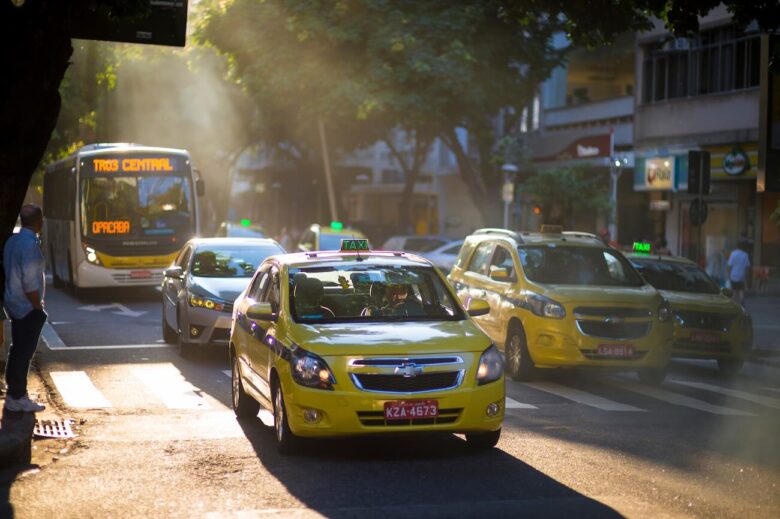
There are plenty of ways to travel from Rio Airport into the city, and the best option depends on your budget, the amount of luggage you’re carrying, where you’re staying and what time you arrive.
I’ve used some of the transport option over several visits to Rio, and while they all have their advantages, some are definitely more convenient than others.
If you just want the quick answer, here are my recommendations.
- Uber is my favourite option for most travellers. It’s affordable, reliable and usually much cheaper than many visitors expect. If you’re travelling with luggage or heading straight to your hotel, it’s hard to beat.
- Official airport taxis are another excellent choice, especially if you prefer fixed fares and don’t mind paying a little extra.
- If you’re arriving at Galeão Airport and want to use public transport, the best options are the BRT + VLT combination or BRT + Metro. Both are inexpensive, although they require changing transport along the way.
- If you’re landing at Santos Dumont Airport, you’re in luck. The modern VLT tram connects the airport with Downtown Rio in just a few minutes and is one of the easiest airport transfers in Brazil.
- I generally avoid the regular city buses. They can be confusing, they’re not particularly tourist-friendly and, unless you already know Rio well or speak Portuguese, there are much easier ways to reach your accommodation.
- If you are looking for a premium service then consider private transfers.
- Renting a car isn’t usually necessary unless you’re planning to take road trips around the State of Rio de Janeiro.
How to Get from Galeão Airport (GIG) to Downtown Rio
1. Bus – The Cheapest Way to Reach the City Centre
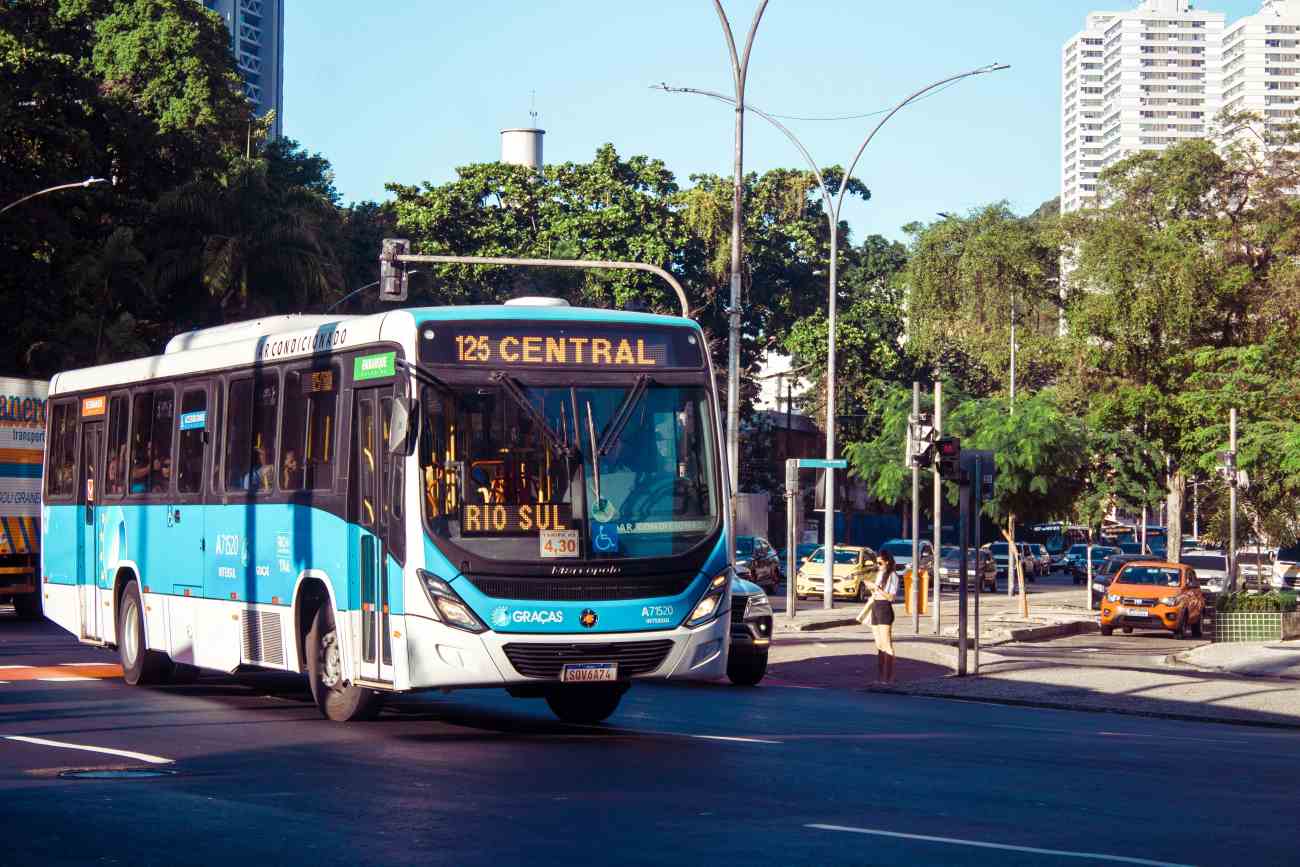
If you’re travelling on a budget, public transport is the cheapest way to get from Galeão Airport to Downtown Rio.
At the moment, the BRT (Bus Rapid Transit) is the only public transport service that departs directly from the airport. To continue into the city centre, you’ll normally need to change buses at Terminal Fundão, where municipal buses connect with different parts of Downtown Rio.
Using the BRT
To use the BRT, you’ll need a Jaé card (or the Jaé app/QR code). Jaé is the payment system for Rio’s municipal transport network, replacing RioCard Mais on municipal buses, BRT, VLT, and other city-operated services. RioCard Mais remains in use for state-operated transport such as the metro, suburban trains, ferries, and intercity buses.
You can buy and top up either card at the ticket machines inside the airport, so it’s worth sorting this out before leaving the arrivals hall.
There are currently two BRT services operating from Galeão Airport.
- Galeão Express Executive: This is the fastest option. It runs non-stop between Galeão Airport and Terminal Intermodal Gentileza, making it ideal if you’re connecting with the VLT tram or other public transport services into central Rio.
- TransCarioca Express–Parador (Line 42): This semi-express service runs between Galeão Airport and Alvorada Terminal in Barra da Tijuca.
Unlike the Executive service, it makes a handful of intermediate stops, including Vicente de Carvalho Metro Station and Terminal Fundão, where you can transfer to other public transport routes heading into Downtown Rio.
1.1. BRT TransBrasil (Galeão Express) + VLT: My Favourite Public Transport Option
If you’re planning to use public transport from Galeão Airport to Downtown Rio, this is the option I’d choose every time. I’ve used it myself, and it’s by far the easiest, fastest and most comfortable way to reach the city centre without taking a taxi or Uber.
The Galeão Express is a modern executive BRT service that runs non-stop between the airport and Terminal Intermodal Gentileza.
Unlike the regular BRT buses, these coaches are designed with airport passengers in mind, offering air conditioning, dedicated luggage space and guaranteed seating for everyone on board. After a long flight, those little comforts make a big difference.
The journey to Gentileza takes around 25 minutes, depending on traffic. Buses operate daily from 6:00 am until midnight, departing approximately every 20 minutes. The fare is R$15, payable through the Jaé system, either with a physical card or the mobile app.
Once you arrive at Terminal Intermodal Gentileza, simply transfer to the VLT (Light Rail), Rio’s modern tram system. It’s clean, efficient and surprisingly easy to use.
The ride into Downtown Rio takes around 15 to 25 minutes, costs approximately R$4.30, and stops close to many of the city’s main attractions, business districts and transport hubs, including Santos Dumont Airport.
In total, you should expect the journey from Galeão Airport to Downtown Rio to take between 40 and 60 minutes, making this one of the best-value airport transfers in the city.
1.2. BRT TransCarioca (Line 42): The Cheapest Way to Connect with the Metro
Another good option is the TransCarioca Line 42, a semi-express BRT service linking RIOgaleão with Alvorada Terminal in Barra da Tijuca.
Along the way it stops at several important transport hubs, including Terminal Fundão, Vicente de Carvalho Metro Station and Madureira.
If you’re heading into central Rio, get off at Vicente de Carvalho and transfer to Metro Line 2, which continues through Downtown Rio before heading towards Botafogo.
If you’re planning to combine the BRT and the metro, make sure you pay using the Jaé system. The integrated fare costs R$9.80, which is noticeably cheaper than buying the tickets separately. If you only pay the BRT fare (R$4.30), you’ll later need to purchase a separate metro ticket for R$7.90.
The service runs every day from 4:00 am until midnight, and the total journey to Downtown Rio usually takes 50 to 60 minutes.
To catch the BRT at Galeão Airport, simply follow the signs for the TransCarioca platforms outside the terminals. Since the airport is the first stop on the route, finding a seat is rarely a problem.
The metro is a different story. During rush hour, trains can become extremely crowded, so if you’re travelling with several suitcases, it’s something to bear in mind.
You can board the BRT from Terminal 1 (Door D) or Terminal 2 (Door H – International Arrivals). Both the TransCarioca and Galeão Express stops are located just outside the arrivals halls and are very easy to find after leaving the terminal.
1.3. Municipal Buses: Cheap, But Not My First Choice
Rio’s regular city buses are the cheapest way to travel from Galeão Airport to Downtown, but personally, they’re not an option I’d recommend for most visitors.
For starters, they don’t stop directly at the airport. You’ll first need to either walk to a nearby bus stop or take the BRT to Terminal Fundão before boarding one of the municipal routes.
The buses themselves are fairly basic, generally without air conditioning and without dedicated luggage storage, so they’re only really practical if you’re travelling with a backpack or a small suitcase.
The fare is just R$4.30, making them the most budget-friendly option.
The buses operate throughout the day and into the evening, and most are in reasonable condition. However, navigating Rio’s bus network can be confusing if it’s your first visit. With well over 100 different routes, it’s easy to board the wrong bus and end up taking a lengthy detour across the city.
Some of the routes serving Downtown Rio include 922 Paranapuan, 915 Paranapuan and 925 Ideal. Drivers are generally helpful and, if you tell them your destination, they’ll usually let you know where to get off.
That said, unless you’re travelling on a very tight budget or already feel comfortable using Rio’s public transport system, I’d personally spend a little more on the BRT, the metro or an Uber. After a long flight, the extra convenience is usually well worth it.
More information: http://www.riogaleao.com/en/transport-parking/buses/
2. Metro: A Fast and Affordable Way to Reach Downtown

If you don’t mind making one transfer, Rio’s metro is one of the quickest and safest ways to reach the city centre. The only thing to remember is that there isn’t a metro station at Galeão Airport itself.
To access the metro, you’ll first need to take the BRT from the airport to Vicente de Carvalho Station, where you can connect with Metro Line 2.
BRT + Metro
I’ve used this route several times, and it’s a good compromise between cost and speed. Once you’re on the metro, travelling through Rio is straightforward, with modern, air-conditioned trains running frequently throughout the day.
The metro operates Monday to Saturday from 5:00 am until midnight, and Sundays from 7:00 am until 11:00 pm.
The closest station to Galeão Airport is Vicente de Carvalho, so simply board the direct BRT from the airport and change there.
When buying your Jaé card, make sure to select the integrated BRT + Metro fare, which costs R$9.70. If you buy the tickets separately, you’ll pay R$7.90 for the metro alone, so the integrated ticket offers much better value.
From the airport, head to Door D (Terminal 1) or Door H (Terminal 2) and board the BRT heading towards Vicente de Carvalho.
Once on Metro Line 2, you can get off at Central, Presidente Vargas, Carioca, Cinelândia or Uruguaiana, depending on where you’re staying.
Most hotels in Downtown Rio are within walking distance of Cinelândia or Uruguaiana stations. If you’re staying in Lapa, get off at Glória, which is the nearest metro stop.
More information: https://www.metrorio.com.br/
3. Taxi: The Easiest Door-to-Door Option

If you don’t want to deal with public transport after a long flight, taking a taxi is one of the easiest ways to get from Galeão Airport to your hotel.
It’s certainly more expensive than the BRT or the metro, but it’s also one of the most convenient options, especially if you’re carrying luggage or arriving after a long international journey.
Having used taxis in Rio on several occasions, my advice is simple: stick to the official airport taxis. They’re safe, easy to find and help you avoid the hassle of negotiating fares or dealing with unofficial drivers waiting outside the terminal.
At Galeão Airport you’ll find two types of official taxis: Special Taxis and Regular Taxis.
Special Taxis
If it’s your first time in Rio or you’d rather know exactly what you’ll pay before setting off, Special Taxis are an excellent choice. The journey from Galeão Airport to Downtown Rio usually takes 30 to 40 minutes, depending on traffic.
Booking couldn’t be easier. After collecting your luggage, head to one of the Official Taxi counters or self-service kiosks in the arrivals hall. They’re clearly signposted, so they’re difficult to miss.
The service is operated by licensed taxi cooperatives that charge fixed fares based on your destination. While prices are generally set, I’ve occasionally seen staff offer small discounts, especially since Uber has become such strong competition.
The biggest advantage is knowing exactly what you’ll pay before you even get into the taxi. Unlike ride-hailing apps, where prices can increase during busy periods, the fare remains the same regardless of traffic.
Expect to pay somewhere between €23 and €33 to reach Downtown Rio. You can pay at the counter using cash, debit card or credit card. You’ll then receive a voucher, which you simply hand to the next available driver outside the terminal.
In normal traffic, the journey takes around 30 to 40 minutes, and I’ve always found the service to be efficient, well organised and readily available.
Regular Taxis
If you’re looking to save a little money, the traditional yellow taxis are a perfectly good alternative.
Like the Special Taxi service, you can pay in advance at one of the airport’s self-service machines or visit the staffed taxi counter in the arrivals area. Paying before your journey gives you extra peace of mind and avoids any misunderstandings about the fare.
Unlike the fixed-price taxis, these vehicles use a taximeter, so the final fare depends on the distance travelled and traffic conditions.
One thing worth knowing is that regular taxis usually charge a small additional fee for each suitcase. Even so, they’re noticeably cheaper than the Special Taxi service, and a trip into Downtown Rio generally costs under €15.
During the day, the taximeter starts at around €1, with an additional charge of approximately €0.44 per kilometre.
Night-time journeys (between 11:00 pm and 6:00 am), as well as trips on Sundays and public holidays, are charged at a higher tariff, so expect to pay a little more.
One tip I’d give first-time visitors is to keep an eye on your route using Google Maps. While most taxi drivers are honest, there are occasional reports of drivers taking longer routes when they realise passengers aren’t familiar with Rio. It’s not something I’ve experienced personally, but it’s an easy precaution to take.
Even if that happens, the total fare will usually still be lower than the cost of a Special Taxi unless you get caught in particularly heavy traffic.
4. Private Transfer: The Most Stress-Free Arrival
If convenience matters more than saving a few euros, a private airport transfer is hard to beat. There’s something reassuring about knowing that someone is already waiting for you, especially when you’re arriving in a destination you’re not yet familiar with.
Private transfers are usually booked online before your trip, and once you arrive at Galeão or Santos Dumont Airport, your driver will be waiting in the arrivals hall holding a sign with your name.
From there, it’s simply a case of walking to the vehicle and heading straight to your hotel. No taxi queues, no language barriers and no wondering whether you’re paying the right fare.
The vehicles are generally much more spacious than standard taxis, with comfortable seats, air conditioning and plenty of room for luggage. They’re a particularly good choice for families, small groups or anyone travelling with several suitcases.
If your flight lands late at night or in the early hours of the morning, I’d say this is one of the safest and most hassle-free ways to reach your accommodation.
Several companies operate private transfers from both of Rio’s airports, with prices varying depending on the vehicle and number of passengers.
For many travellers, the extra cost is well worth it for the comfort, reliability and peace of mind. After all, there’s a lot to be said for starting your Rio adventure without having to think about transport at all.
>>> Rio de Janeiro Airport Transfers <<<
5. Uber: My Go-To Way to Get from Rio Airport to the City
If you ask me for the best way to get from Galeão Airport to Downtown Rio, my answer is almost always the same: take an Uber.
I’ve used Uber several times in Rio, and it’s consistently been the option that (for me) offers the best balance between price, convenience and reliability.
Unless you’re arriving during a major event or at the busiest rush hour, it’s very reasonable priced and very confortable.
At Galeão Airport, Uber pickups take place on the Departures level (2nd floor), usually at Gates B or C. Don’t worry if it’s your first visit, the app provides clear directions, and there are plenty of signs inside the terminal.
Your driver will normally arrive within a few minutes, and you’ll be able to track the vehicle in real time while also seeing the driver’s name, rating and licence plate.
Payment is completely cashless, using the credit or debit card linked to your Uber account, so there’s no need to worry about carrying Brazilian Reais when you arrive.
Which Uber Should You Choose?
Uber offers several categories in Rio, but for most travellers UberX is the obvious choice.
It’s the cheapest option and comfortably accommodates up to four passengers with standard luggage. Depending on availability, you might be picked up in vehicles such as a Ford Fiesta, Volkswagen Voyage, Fiat Siena or similar cars.
A trip from Galeão Airport to Downtown Rio usually costs between €9 and €16, making it remarkably affordable by international standards.
If you’re looking for something a little more comfortable, Uber Black is also available. This premium service uses newer executive vehicles such as the Toyota Corolla, Honda Civic, Nissan Sentra or Renault Fluence, and the drivers tend to have higher ratings and more experience.
Surprisingly, Uber Black isn’t dramatically more expensive.
My tip: Before leaving the airport, compare Uber with the fare shown for the official airport taxis. In my experience, Uber is usually cheaper, although during periods of high demand the prices can occasionally surge.
6. Car Hire: Only Worth It If You’re Exploring Beyond Rio
People sometimes ask me whether it’s worth renting a car in Rio de Janeiro. For most visitors, my answer is no. If you’re staying in Copacabana, Ipanema, Leblon or Downtown Rio, you’ll probably spend more time looking for parking than actually driving.
Traffic can be heavy, parking isn’t always easy to find, and Uber is inexpensive enough that hiring a car rarely makes financial sense. That said, there are situations where renting a car is absolutely worthwhile.
If you’re planning to explore destinations such as Búzios, Arraial do Cabo, Petrópolis, Ilha Grande, the Costa Verde, or you’re staying in Barra da Tijuca and intend to drive frequently, having your own vehicle gives you much greater flexibility.
Fortunately, Galeão Airport has offices for all the major international and Brazilian car rental companies.
My advice is to book online before you travel. Not only will you usually get a better price, but you’ll also avoid the queues that often form at the airport rental desks, particularly during holidays and weekends.
Once you’ve completed the paperwork, you’ll simply collect your keys and drive away. Most companies also allow you to return the vehicle at another office in Rio, although it’s worth checking the conditions in advance.
Keep in mind that many Brazilian rental companies don’t allow cross-border travel into neighbouring countries.
As a rough guide, an economy car with basic theft insurance and limited mileage costs around €30 for a two-day rental, although prices fluctuate depending on the season.
For me, renting a car only starts to make sense if Rio is just the beginning of a wider road trip. If you’re planning to discover some of the incredible beaches, colonial towns and national parks beyond the city, having your own wheels gives you complete freedom to explore at your own pace.